Fir TreeJunior School
English
Welcome to our English Curriculum
English is at the forefront of the curriculum at Fir Tree. We are committed to delivering a high-quality education which teaches pupils to write fluently across a broad range of texts and with a deep understanding. At Fir Tree, we foster a culture of reading that allows all children to find texts they can enjoy and engage with; reading will then enable them to develop culturally, emotionally, intellectually, socially and spiritually. At Fir Tree, the knowledge and skills that we equip children with, in English, are essential to pupils participating fully and wholly as a members of society.
Our Approach to English
At Fir Tree, we passionately believe that children's learning in English (reading, writing, spelling, speaking and listening) should be engaging, purposeful and underpinned by an approach which builds on children's pre-existing interests, skills and understanding. English is woven through our projects and subjects in imaginative and meaningful ways, leading to highly motivated and rich learning experiences for our children.
'Talk for Writing' is at the heart of our English learning which means that we have lots of opportunities to explore our ideas through drama and discussion before putting pen to paper - this not only builds our confidence, but helps to embed the features and language of our text type before we start the writing process.
Reading and Phonics
We encourage children to read and develop a love of reading. We have a well-resourced library and children also visit our local Wallingford library. Reading with children happens across the week in each class. We teach reading daily in whole class sessions, guided reading sessions and for children who are still struggling to decode words and understand the sound system, we use the Rocket Phonics programme.
Mastery in English
Our English curriculum is firmly rooted in our goal to challenge all of our learners to develop their 'Mastery' in reading and writing. This approach to learning is lead by the principle that mastery is about deep, secure learning for all, with the extension of learners rather than acceleration through new content. As a result, our learning in English focuses on depth of understanding and ensures children develop a rich awareness of audience and purpose within their reading and writing.
To develop their mastery of reading, our children have lots of opportunities to engage with a wide range of challenging texts which will develop their passion for reading and breadth of knowledge; our school library is stocked with a fantastic collection of high-quality reading materials and each classroom has a 'reading corner' to foster children's recommendations and sharing of texts. Through their careful planning, our teachers ensure that all children are immersed in motivating and challenging texts; they provide a range of individual and shared reading opportunities so that comprehension, grammar and technical writing skills are embedded into the whole-class teaching approach and guarantees that these are shown within a 'real' purpose and context. To foster mastery in writing, teachers use skilled questioning to encourage children to understand and explain why - as authors - they have chosen specific language, style, structure or punctuation. This understanding of the audience and purpose of their writing is developed in whole class, small group and individual learning conversations and teaching, which can include shared writing (where teachers can model on-going evaluations of writing through 'out loud' thinking).
How our web page can help:
This has been designed to be a space with a bank of resources to support the learning of English (reading, writing, spelling and grammar) at home.
As requested from our Curriculum Evening, here are a selection of resources you may find useful.
Please see Miss Hutchings if you have any further questions.
Phonics Scheme
Information for parents about the English Curriculum
- English at Fir TreePDF File
- Reading Curriculum Statements for Assessments Year 3.pdfPDF File
- Reading Curriculum Statements for Assessment Year 4.pdfPDF File
- Reading Curriculum Statements for Assessment Year 5.pdfPDF File
- Reading Curriculum Statements for Assessment Year 6.pdfPDF File
- Writing Curriculum Statements for Assessment Year 3.pdfPDF File
- Writing Curriculum Statements for Assessment Year 4.pdfPDF File
- Writing Curriculum Statements for Assessment Year 5.pdfPDF File
- Writing Curriculum Statements for Assessment Year 6.pdfPDF File
- English Policy.doc.pdfPDF File
- The English Curriculum.docx.pdfPDF File
- Reading Knowledge and Skills Progression.pdfPDF File
- Writing Fiction Knowledge and Skills Progression.docx.pdfPDF File
- Writing Non-Fiction Knowledge and Skills Progression.docx.pdfPDF File
- Writing SPaG Knowledge and Skills Progression.docx.pdfPDF File
Reading resources - Year 3 and 4:
Reading Resources - Year 5 and 6:
School Library
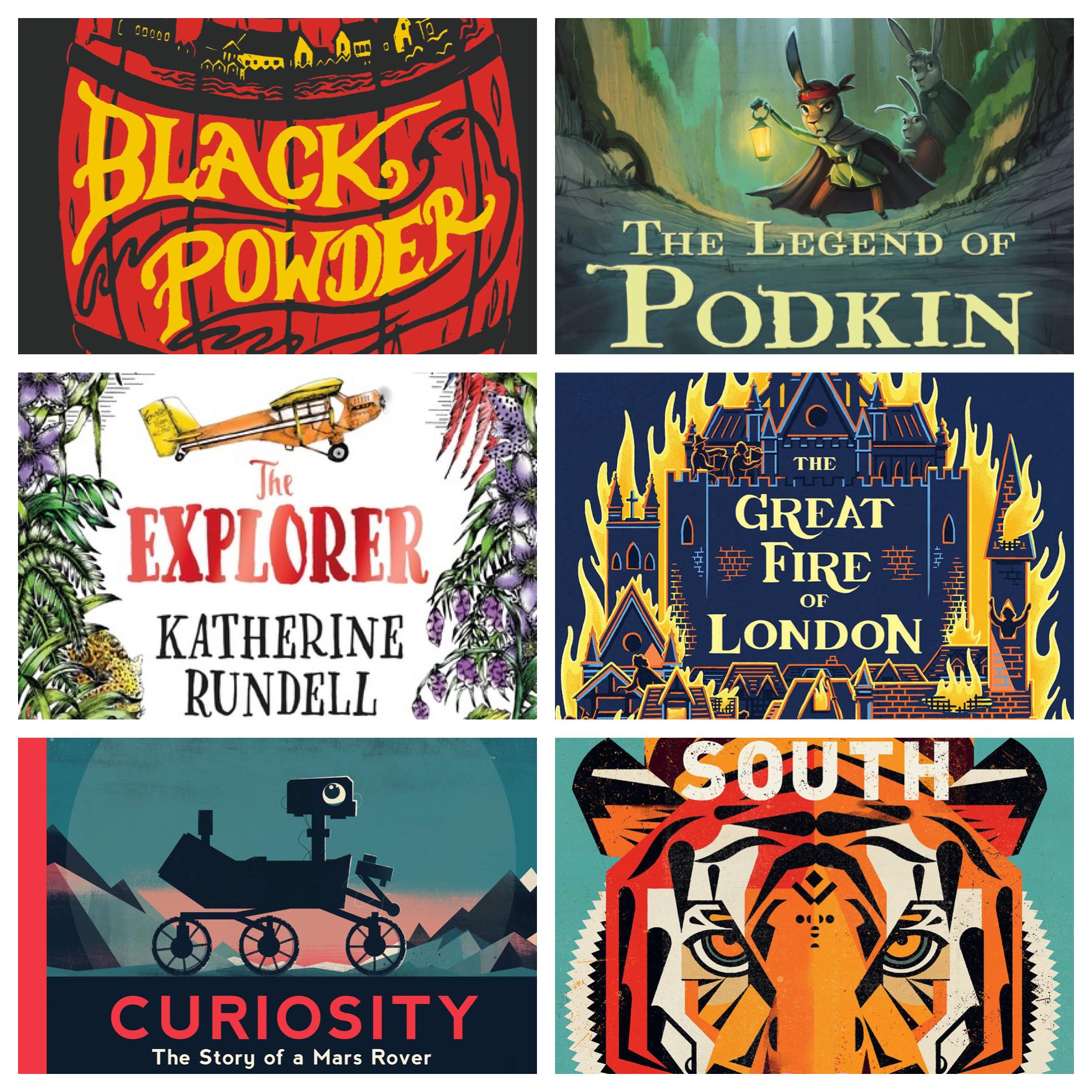
One of the most important rooms in our school is the library. We have a huge variety of books that we add to with recent and current books so as to keep our library up to date. We also have three diligent librarians who keep our library in shape by organising and sorting the books; they are also very good at making recommendations to anyone needing some inspiration for their next book choice. If you have your own suggestions or recommendations for books that you would like to see included in the library, please speak to either the librarians or to Mr Wilcox. Have a look below at some of the more recent additions to the library: