Fir TreePrimary School

Cedar Year 3
Welcome to Cedar Class, Year 3 2025-2026.
Cedar Class has 24 children. The Cedar team are Mrs Giles (Mon-Thurs), Mrs Downs (Fri). Our teaching assistant is Mrs Hall and she is in class every morning. Making learning fun is our speciality! There are so many fun things to look forward to in the year ahead.
Please do not hesitate to get in touch if you ever have any queries or concerns.
Please could all parents teach their children how to tie their shoe laces. Thank you.
Term 4 PE is Tuesday and Thursday. Please wear your PE kit to school on these days and bring extra warm layers for cold days and sun hats for the heat!
Please bring a coat to school everyday. Children need fresh air and exercise so they can learn best and we do go out in light rain. Remember a water bottle every day. A piece of fruit at playtime really helps children to concentrate on learning up to lunch time. Many thanks.
Spelling lists year 1, 2 and 3/4
Useful Information and Links
Reading Information and Great Book Ideas
Contact Us
Term 4
Science and English - Finding out about a range of animals and learning key vocabulary such as vertebrate and invertebrate.


Maths - Parallel lines = Lines that keep the same distance apart and never meet e.g. train tracks. Perpendicular lines = lines that meet at a right angle. We hunted for examples of these lines in our environment and made our own with a partner. Which can you see? Which are NOT perpendicular or parallel?


Art - We made a person from a whole piece of paper with 3 slits in it.


Rugby warm up. A team hold hands in a circle. One person is chosen to be tagged in the circle by the tagger who can only run around the outside of the circle to chase them down. The team can only go left and right to protect their player. Could the tagger catch them? Teamwork was essential to succeed.


Art - Drawing. Tyma and Imogen were our models for these quick sketches.


Angles, angles everywhere! First we learnt about turns - quarter turn, half turns and three quarters and full turn and identified if they were clockwise or anticlockwise. Then, we went hunting for right angles, acute angels and obtuse angles in our classroom and outdoor areas.


Skateboarding with Alex was great fun! The whole class made brilliant progress throughout the lesson and it was a first class display of resilience, courage, encouragement, friendship and determination. Staff were, as always, extremely proud of them all!


Term 3
Art - learning about texture


By placing a piece of paper over a textured object and rubbing it with wax crayon or pastel, the impression of the surface is transferred onto the paper, making its texture visible and easier to observe it's finer details. We explored this in a lesson to think about raised surfaces and their effectiveness for printing when we create our Iron Man images by pressing into aluminium toiling foil in a couple of weeks time.
Writing
Our writing lessons over the last few weeks have been based on the Iron Man story by Ted Hughes. We have focussed on using different writing techniques and sentence types. The work of the class has blown our socks off, and we have to keep reminding ourselves that it is only a Year 3 class! Imagine what they will be writing in Year 6! Here are just a few examples to give you an idea of the breath-taking quality.......
'Tip toeing timidly into the deep dark night, he knew he had to discover more about the Iron Man.
Hogarth peeped.
Hogarth peeped uneasily.
Hogarth peeped uneasily watching.
He heard scurrying squirrels in the distance, crunching leaves under his muddy feet and rain splashing in puddles of mud.'
'Up on the oak tree tops, an owl sat as it was watching it's prey. Underneath the crunchy leaves, a small hedgehog was making it's home. But deep underground, a sneaky fox lay in it's burrow.' - Jake
'Up high on the huge tree tops, a delicate owl rests with it's beautiful baby beside her. Down low in the soft soil, a mole burrows, hiding from the foxes. Behind a shimmering silver birch tree, vermillion foxes play.' Mia
'A gloomy mist fell. A translucent fog surrounded. A creepy gloom collapsed. His torch sprayed light all over a colossal tree."
Music - Turning our hand to composing using the notes, B, A and G. The rule was to start on a crotchet B and then finish on a semibreve G. There also had to be 4 beats in every bar. Parents, dig out your recorder from your school days and see if you can play these! (Click on each picture to enlarge it.)


PE - Our dance work this term is based on the story of Matilda by Roald Dahl
-

Matilda discovers she has magic powers.
-

Different poses are experimented with at different levels.
-

Facial expressions are explored, too.
-

Is Matilda now in deep concentration or having fun using her magic?
-

We explored making gestures and actions bigger so they could be seen by an audience.
-

Matilda has a lot of control over her powers now and is confident!
-

Partnering up - Matilda is now controlling the objects around her
-

making them rise, fall, spin, stop,
-

topple, fall and more all with a gesture or a stare!!
-

Our duet dance had starting positions, a magical routine and an ending pose.
-


The formidable Miss Trunchball enters our dance


Science - We were challenged to make a light proof den. Which materials were best at keeping the light out? Were the best materials transparent, translucent or opaque? What are the meanings of these 3 words? Why not try making a light proof den at home?


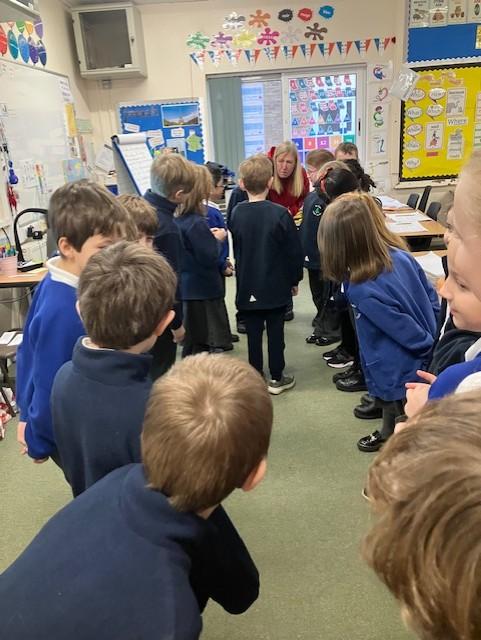
Generating questions about the Iron Man in role as the young boy, Hogarth from the Iron Man by Ted Hughes.
Where has he come from? Why is he here? Does he speak English? What are his intentions? Is he going to harm us? Can we trust him? How did he get here? Should we be concerned? How long will he be here for? Is he from outer space? What is he made of? Would he live in peace with us? What does he eat? When and how did he arrive? Could he become our friend? Should we report him and have him sent away?
The answers are unknown.
Art - 4 different cat drawing challenges


Term 2
Beginning a science project about light.


Look inside the peep hole of the first box number (pictured above), and what do you see? Nothing! Only darkness could be seen.
Shine a light through the hole (second picture above) and look again. What do you see this time? A green plastic dragonfly! Why couldn't the dragon fly be seen the first time we looked?
What is darkness? Darkness is the absence of light.
Have you ever been in complete darkness, really, really complete darkness where no light can peep under a door or through a crack in the curtains?
Try to find somewhere to experience it. How does it feel? Can your eyes actually adjust to the darkness as some people believe?
Stonehenge Artwork


Some of our family Christmas tree decorations


Visit from the police about celebrating the differences in people


Developing skills in using watercolours
-

Exploring making darker and lighter shades.
-

Begin with one palette colour.
-

Add a little black each time to make a colour darker.
-

Add a little white each time to make it lighter.
-

Add more water also to dilute a colour. into a lighter shade.
-

We had to remember to mix the paint and water well in the mixing tray.
-

-


The fossilisation process - can you remember the process?


Learning about adverbs and imperatives through playing a game


Art - Continuous line drawing. Learning to look carefully and draw slowly without taking our hand off the page. You can go back over lines and create darker shades. Why not try it for yourself?


As part of our Stone Age project we have been reflecting on early drawings. We imagined how people in the Stone Age communicated, what they had to say and even what they had available to use. Some of the real earliest works were in deep caves and featured bison, horses, hunting scenes and handprints. They were generally created using natural earthy colours from minerals and charcoal, and applied by using fingers or twigs. Many real examples can be seen in France, Spain and Africa and can be over 40,000 years old.
Armed with a piece of charcoal, piece of paper and the instruction to use a hand only, children created many different hand shapes, shades and different messages. What do you think these pictures communicate?
Recreating cave art


Term 1


Music - Developing our listening skills and responding to Mussorgsky's 'Night on a Bare Mountain'. Without knowing anything at all about the music, the class were asked to respond by drawing what they thought the music suggested. They had to imagine that they were watching the music as a film. They came up with fabulous ideas proving their thinking by referring to the volume, (dynamics), speed, (tempo), highs and lows of instrument voices, (pitch) and more!


Some of our spooky Halloween poems showing what we have learnt about onomatopoeia, similes and alliteration


Getting hands on with rocks! Our thanks go to the British Geological Survey for the loan of the rock box.
-

Using magnifying glasses to examine rocks closely.
-

Obsidian rock - so sharp it is used in operations. Gloves must be worn!
-

Learning to observe closely, looking for grains, crystals and holes!
-

A grain on your fingertip! We wonder how many grains made up our rock sample.
-

Reading rock facts.
-

Finding out about the uses of rocks and more about their properties.
-

Learning about rock groups - sedimentary, igneous and metamorphic.


Take a scrap of newspaper and a pen.... what character can you turn it into?


Handwriting - We take pride in our handwriting and have the goal of working towards getting a pen to use!


A snapshot of our PSHE learning
-

Imagining a new person joining our class who has never attended school before.
-

What worries would they have?
-

What are they possibly scared about?
-

What could we say say/draw in a card to make them feel welcome?
-

What would make them feel safe and valued?
-

What responsible choices and actions can we make?
-

Excellent suggestions were made showing what a kind and considerate class we have.


Previous Year 3 Class
Our visit to Hill End to learn more about the Romans


Exploring role play to develop our ideas for writing in role as a Roman soldier


Term 6
Art - Drawing a Roman Soldier


DT - Moving parts. We have been exploring different techniques and mechanisms for making pop up books.


Roman Mosaics


History detectives - What could this artefact be?


Poetry verse based on 'Storm at Sea' by Alexander Rakic. This poems explores the use of onomatopoeia, similes and metaphor. We thought of different synonyms to find the best word choices.


Art - Some finished artwork for 'Tempest At Sea'


Term 5
Art exploration
-

We have been exploring water colours and wax resist techniques.
-

We observed the effects of gravity on watercolours to create interesting effects.
-

Painting 'wet on wet' we saw the colours bleed into each other.
-

Different mark marking with wax/oil then applying a wash over the top, seeing the resist.
-

Which effects do you like and why? What would be most effective for a storm?
-

Using charcoal and water colours
-

We look forward to putting these skills into action when we create a tempest picture.
-

-

-

-

-

-

-

-


Haiku Poems about the beginning of the Tempest - a three line poem consisting of just 17 syllables. Five syllables on the first and third line, and seven on the second line.


Dramatising the very beginning of the story 'The Tempest' by William Shakespeare.
-

There's nothing quite like getting into role with a beard for Prospero the wizard!
-

Prospero is saying a spell, however Mirander is begging him to stop....
-

...concerned that people aboard the ship will be killed! Da..da daaahhhh!
-

At the every beginning we are introduced to Prospero and his daughter, Miranda.


Term 4
Maths - In maths we have been learning strategies called partitioning, adjusting and redistributing. We have been practising using all these strategies and thinking about which is the best strategy for each sum so we can be efficient, or 'lazy' mathematicians as we call it in Cedar Class!


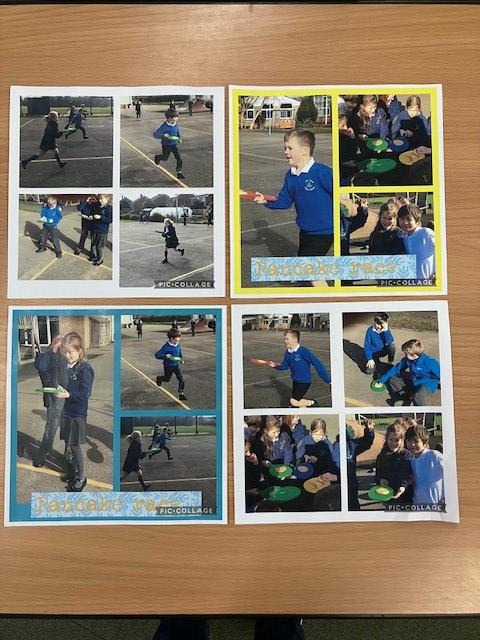
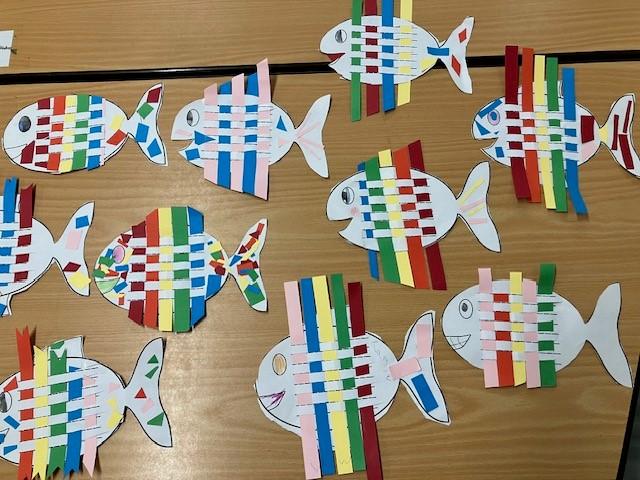
Science - We were exploring ideas about forces and magnetism. We were challenged to find magnetic and non-magnetic items around the classroom. We used vocabulary such as repel, attract to explain our thinking. We then made magnetic mazes with plastic bottles.
-

We identified what materials things were made from.
-

We discovered iron, cobalt and nickel are magnetics metals. Not all metals are magnetic!
-

Metals such as bronze, silver, gold, copper and aluminium are not magnetic.
-

It was fun making the magnetic mazes!
-

We enjoyed designing them and trying them out!
-

Athena needed a stronger magnet to move the 10p in her bottle she had made at home.
-


Term 3
A fantastic and memorable visit to 'Crocodiles of the World' (Click on pictures to enlarge.)


The Enormous Crocodile show preparation and rehearsals


Science - Exploring ideas about foods and different food groups. We looked at the Eatwell plates and considered what is a balanced, healthy diet. We had fun creating movements for the different groups to remember them. The children then called out different foods to see if others could remember which group they belonged to.
-

Sugars and fats - 'just a little bit!'
-

Proteins help our bodies to grow and repair e.g. lentils, eggs, meat and fish.
-

Dairy such as milk, cheese and yoghurts are good for teeth and bones.
-

Unsaturated fats are best which can be found in oily fish, avocados, nuts and seeds.
-

Fruit and veg contain vitamins and minerals to keep us healthy e.g. kiwi, peas, apples etc
-

Carbohydrates give us enery e.g. bread, pasta and rice


Going on an angle hunt around the classroom


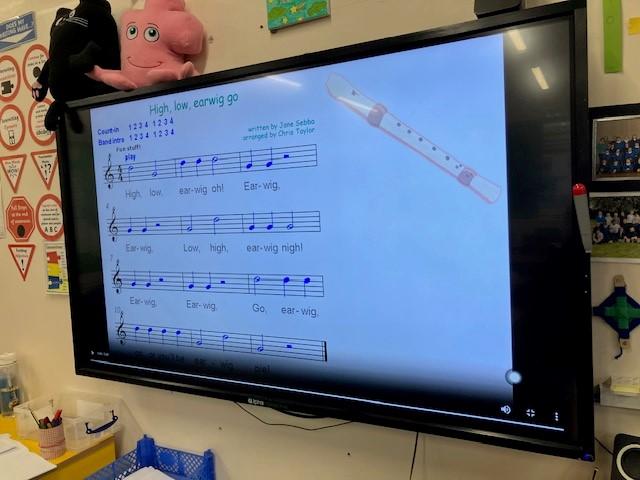
Working on the coordination to move from 1 fingered D to 4 fingered G smoothly!
Shape and Angles - exploring ideas
-

What shapes can be made with right angle triangles joined by same length sides?
-

How many sides has each shape? What was the largest number of sides with 2 triangles? 3?
-

How many right angles? Acute angles? Obtuse angles?
-

Are there any lines of symmetry? 0? 1? 2?
-

Is the number of vertices the same as the number of sides? Always, sometimes or never?
-

We used a little green square to check for right angles.


Term 2
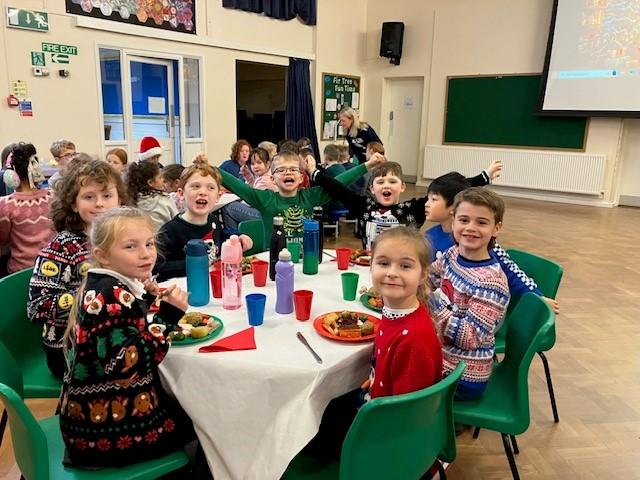
Christmas Dinner! Many thanks to Siva, Sanusha and the entire team of helpers for a fabulous feast.


Maths Game


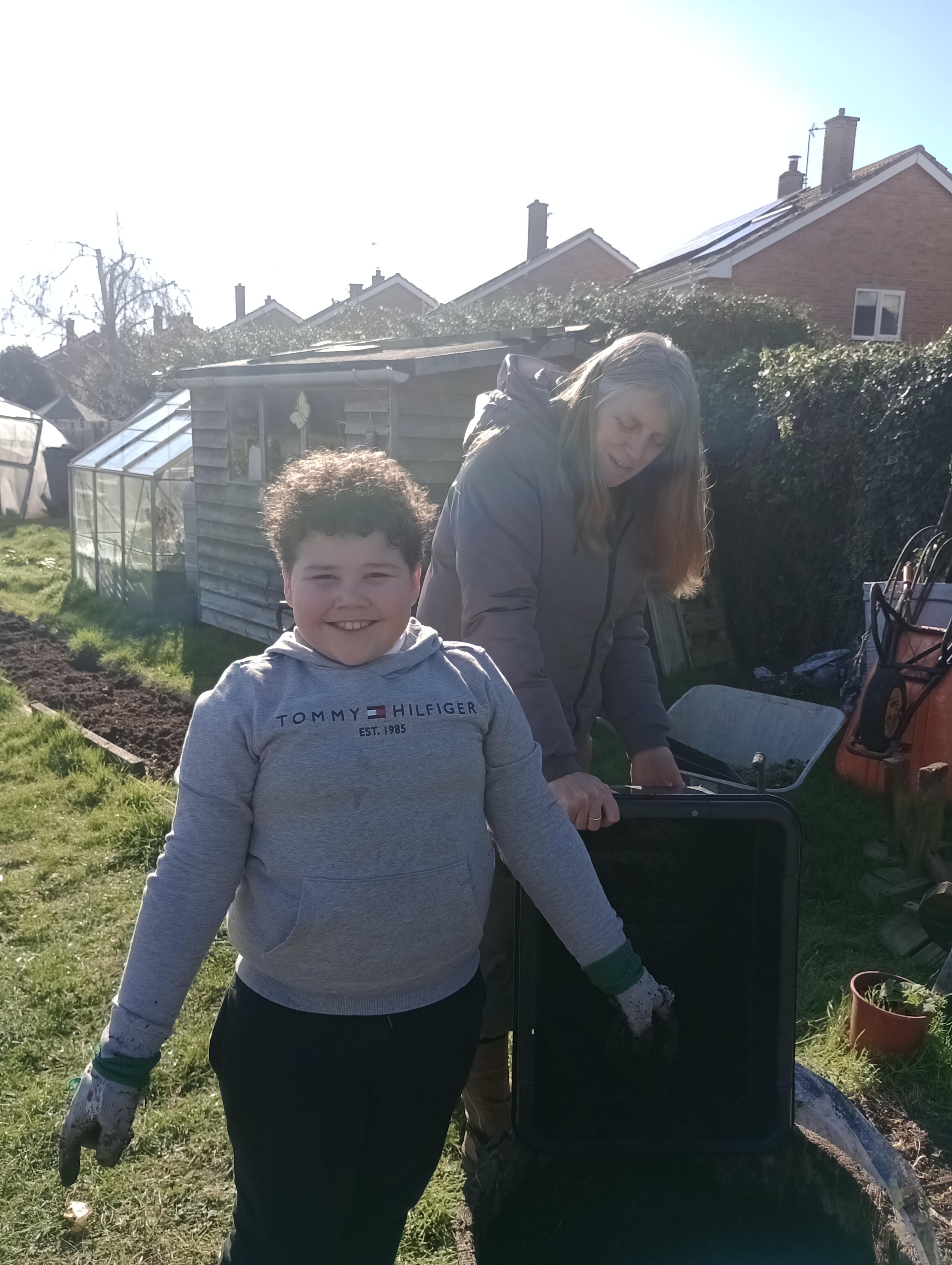
Gardening with Mel
-

Half fill a pot with compost.
-

Plant the trumpet daffodil bulbs nose up! The hairy bits are the roots which point down.
-

Place more compost over the top loosely.
-

Press it too firmly and there won't be space for growth.
-

Take it home. Find a good location for it either outside or on a window ledge.
-

Be careful not to over water it!
-

We look forward to hearing about how well they grow in the spring.
-

Thank you Mel!


It's Panto Time! We all had a fabulous time! Oh yes we did!
-

Jokes, heinous tricks, deceit,
-

slap stick comedy, 80's songs, dancing,
-

bubble machines, fake snow, water pistols,
-

good versus evil, pantomime dame,
-

colourful outfits, creative ever changing scenery
-

glitter ball sparkles, audience song and dance, sweets and more....!
-

Happy Ever After.
-

And one of our very own Sleeping Beauties on the coach home.


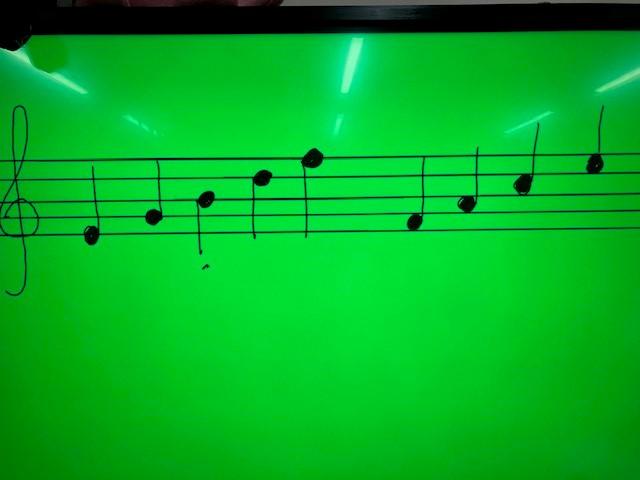
"Every Good Boy Deserves Football." FACE. Why not try making up your own rhyme?
Science - Exploring shadows
-

First, we grabbed the opportunity to draw around our shadows on a sunny day.
-

At the end of break and lunch we observed the shadows had changed position and size.
-

We observed that the sun had changed position causing our shadow to change also.
-

We made a shadow puppet in groups and investigated how shadows changed.
-

What makes a shadow bigger?
-

Or smaller?
-

Or darker?
-

Or lighter?
-

Some people made their shadow puppet dance. Can you think how they did this?
-

Can you put on a shadow puppet show at home? Can you make animal shadows with your hands?


Art - Drawing an outline, shade and shadows


Science -Problem solving how to light proof a den
-

What is the best way to light proof a den?
-

In groups, the children collaborated to make the darkest den possible.
-

Choosing dark fabric colours let in least light. Pale colours let light through easily.
-

Several layers helped where fabrics were lighter in colour.
-

Being vigilant - checking for gaps. Smaller spaces were easier to light-proof.
-

Have a go at home! What materials could you use? What have you learnt already?


Orienteering and a Pudsey challenge for Children in Need.


Dance


Dance with Emma Seymour.
The children talked about what they knew about the Stone Age, then they thought about movements for Hunter Gatherers.
In the lesson they learnt what a 'gesture' movement was and explored working at different levels. It was great fun and revealed that there are many talented dancers in our class!
Design Technology - Sewing


A whole school challenge was to recreate a famous piece of artwork. Cedar Class recreated The Anatomy Lesson of Dr Nicholaes Tulp (1632) by Rembrandt.


English - Learning the features of a non-chronological report text


Non-chronological report writing
When learning to write features of different types of text, we often learn and practise vocabulary. For non-chronological text features we have looked at interesting sentence starters, causal conjunctions, generalisers, and the language of comparison.
Interestingly, Surprisingly, Amazingly, Intriguingly,
These are all examples of interesting sentence starters which hook the reader in and keep the text exciting. We learn that each of these words would have a comma after it when used at the start of a sentence.
most all some many a few usually occasionally the vast majority
These are all examples of generalisers. They often tell us more information such as how many and how often. These types of words are useful in report writing to aid understanding.
caused by results in so so that because therefore
These are examples of causal conjunctions. They are words or phrases that give reasons or explanations for something in a sentence.
like unlike similar to related to differs from
These are examples of language of comparison. By comparing and contrasting people can learn about similarities and differences and understand subjects better.
We rehearse sentences orally using many examples before we begin to write them down. The more we practise, the more confident we get.
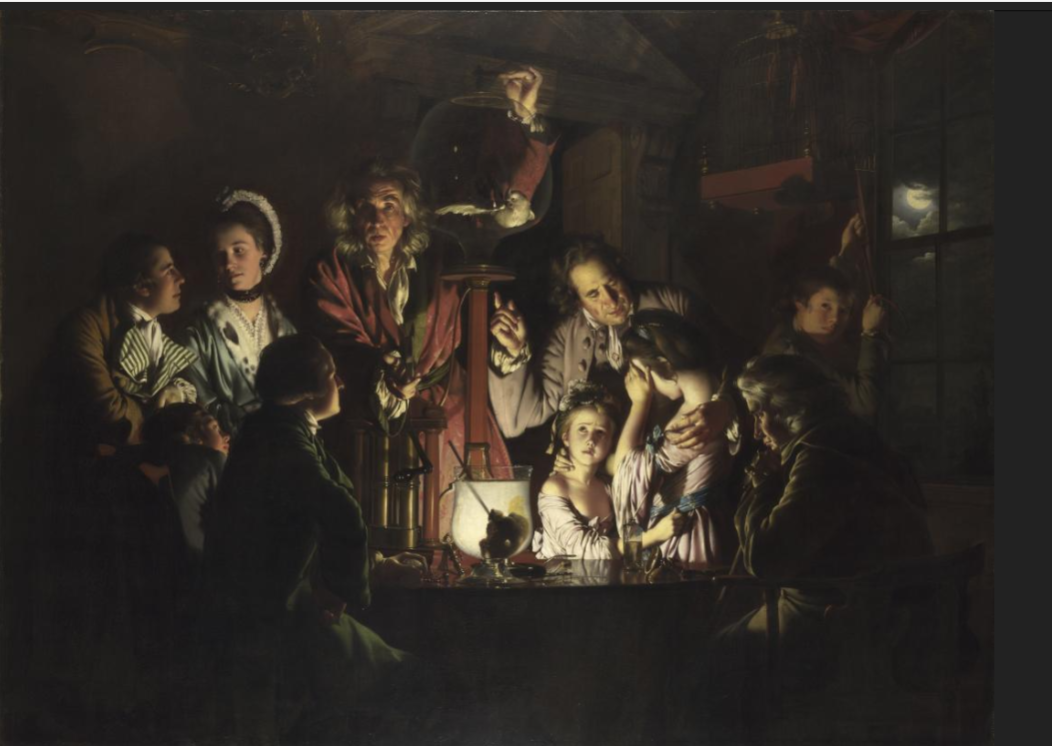
We looked at this picture and were able to zoom in and look at things closely to inspect the finer detail.
We noticed the feelings of all the different people within the picture. It differed greatly from person to person and their perspective of things!
The clothing of the people was quite a talking point and helped us to place this picture in history.
We supposed the professions of people and family relationships and what the interests of people were.
We discussed the light and dark within the picture and how it made us feel. The tiny moon through the window was observed.
The more we looked, the more we saw! We had great discussions and everybody noticed many different things.
How good is your superpower of looking!


Science - Light
-

We were investigating which surfaces and colours reflected the most light.
-

We put 'reflection catchers' around our torches and closely observed the reflection on it.
-

Dark colours reflected little light as most of it gets absorbed.
-

Bright colours, (yellows, whites and shiny surfaces especially) reflected a lot of light.


Take One Picture
-

A title needs capital letters for the start of each word.
-

Come on then parents! What is the best title you could think of for it?
-

We looked at the picture in detail and then choose the best title for it.
-

We explored the idea of finding best words.
-

We decided that a title should not be too long.
-

Alliteration can be effective in a title making it memorable.


Take One Picture - Completing half of the picture using pastels


Responding to the portrait - What do we see, imagine, hear, feel, and smell?


PE - Our first netball lesson with Mr Mule


Our Visitor, PC Haynes from Thames Valley Police
-

Introducing PC Haynes.
-

This story was shared, exploring the idea of differences between people.
-

She also shared a power point which promoted a lot of discussion and activities.
-

Ideas shared today will be regularly revisited.
-

Our differences make us unique!
-

This is a good topic to discuss with your child at home. Who do they trust?
-

Find examples to show you are following these golden rules.
-


Learning about the artist, Guiseppe Arcimboldo


Maths - we use lots of manipulatives to prove our thinking and to create visual images in our mind.


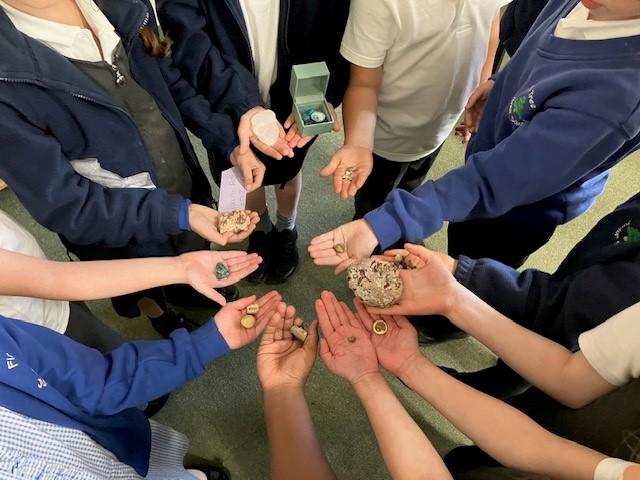
Why aren't all rocks the same? What makes them different? Name as many rocks as you can!
Exploring the rocks box we loaned from The British Geological Survey
-

Looking at a selection of metamorphic, igneous and sedimentary rocks.
-

Sharing what we have found out and comparing.
-

Finding out about rock uses.
-

Some of the rocks are so sharp they are used in surgery!
-

Finding similarities and differences between the rocks.
-

Using magnifying glasses to see the detail.
-

Making notes of observations and facts that interested us
-

The black rock called obsidian was the class favourite!


Art - Using watercolours to create sunset or sunrise and then creating the silhouettes of the stones from black paper


Cave paintings


Some of the facts we have read about Stonehenge
Stonehenge is the world's most famous stone circle.
It is in Salisbury Plain in Wiltshire which is about 2 hours from London.
The land is flat.
Early British people settled here.
Some people believed the stones had special powers.
The bluestones at Stonehenge come from Wales and they are not actually blue, they are grey!
Some of the sandstones used are 4-7metres high and weigh as much as eight female elephants!
Some of the stones have fallen. Some are missing. Others have been damaged by the weather.
Nowadays, many tourists travel to England to see the stones.
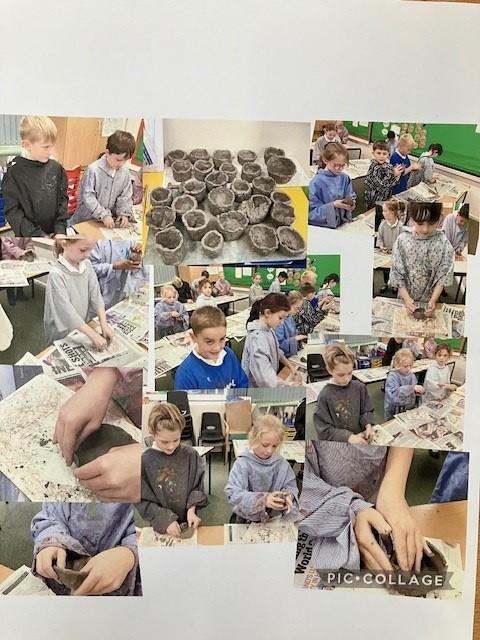
Science - Learning about the process of fossilisation.
-

First, we practised the key scientific vocabulary we would need. E.g. decompose, sediment
-

Then, we watched two short video clips about the process of fossilisation.
-

Groups were challenged to create a TV show about what they had learnt.
-

The devised a plan, delegated parts and rehearsed.
-

Finally, they performed their shows to the class with scientific accuracy,
-

good vocabulary, confidence and creativity. It was LOUD, PROUD and A LITTLE BIT SLOW.


Looking closely to develop skills in Art by taking a line for a continuous walk


French
Bonjour! Salut! Since the beginning of the academic year, we have been learning the French letters of the alphabet and several phonic sounds.
At the time of writing we have learnt these phonics; ch, oi, ou, on, i, ique, ille and in. We have looked at examples of words containing these phonemes such as; cinq (5), six (6), cheval (horse), oisseau (bird), famille (family), musique (music) and cochon (pig) . French accents are coming on really well within the class.
Below is some of the work completed in the last academic year to give you a flavour of what we get up to in Year 3.
Term 6 -The Tempest by William Shakespeare and Plants
Maths - Recreating right angles with body shapes, then going on an angles hunt in the school grounds to find examples of acute, obtuse and right angles.


We have been writing our own beginning of The Tempest story. We have explored ‘ninja’ vocabulary through work with a thesaurus and generated similes, personification and more! We couldn’t be more proud of the work ALL the children in writing and the progress they are making.
A strong hurricane was erupting over the island. Palm trees were cut, ripped and sliced. The gale hissed and slashed off their branches which sent them falling through the air uncontrollably.
On a sandy beach, not far from the mouth of his cave, stood Prospero, the king wizard, his white lily hair and white lily beard streamed out in the hissing wind. His jet black robes flapped around.
By Esme
Long, long away there was an island perished by a devilish storm. Hurricanes, gales and tornadoes, cracked and thundered. The heavy wind blew and sliced the poor palm trees. They rotated like dancers doing great backflips. The gales squealed as loud as ten thousand lions roaring at the same time. The palm trees that slouched were already in the distance. The storm, which screeched and howled, got heavier and heavier.
On a wet, miserable beach stood mute Prospero, the hairy, wrinkly wizard. Raging, wild weather yelled into the ears on the wizard. In the dark, blood-curdling cave, his raven black robe fluttered furiously.
By Milan
An aggressive, violent, horrific and torturous storm was raging over the island. Palm trees arched and the branches were crooked. They twisted and turned as flew through the air.
On a stormy beach, not far away from the mouth of the cave, Prospero, the evil wizard, was positioned with his snowy white hair and beard streaming out in the wind. His charcoal robes were flapping around him.
By Ryan
Music - End of year recorder performance


Ukulele taster sessions - such fun!
-

We learnt about all the parts of the ukulele such as the..
-

head, neck, body, pegs/tuners, strings, frets,
-

nut, saddle, ribs, back and bridge. Can you find and name them all?
-

We learnt the names of the strings - GCEA from top to bottom.
-

We remember the strings with a rhyme - Good children eat apples!
-

We learnt that when a string is shorter, it's pitch is higher. (Ruler demonstration!)
-

We were given some brilliant top tips on how to make the best sound.
-

Put your finger next next to the fret, not on it.
-

If it doesn't sound right, apply more pressure.
-

We played our first piece of music called, 'Drive'.


Art - Creating a vase design.....


Science - Learning the names of parts of the plant and understanding what the job of each part is.


Art - Exploring the shapes of flower heads before we commit our ideas on foam ready for printing


Understanding the opening of The Tempest story by William Shakespeare


Term 5 -Take One Tale and Amazing Bodies
A selection of some of the fantastic project homework which the class loved sharing. Thank you for all your hard work.


Science - Learning about how muscles work and making a model.


Science Investigation - Do people with the longest femur have the longest jump?
-

What would your prediction be and why do you think that?
-

What needs to be done to make it a fair test? Footwear? Type of jump? Clothing? Surface?
-

Measure and record the length of everyone's femur.
-

Carry out the test. Record the length of each jump.
-

Look at the results. Compare results of different groups. Draw a conclusion.
-

We found out that sometimes the person with the longest femur can do the longest jump.


Art - Drawing detailed bodies in pen. Look. Look again. Look some more. Look at shapes. Look at size. Look at detail. Draw it in pen so you can't rub out. Thanks to our fantastic models, Louie and Olivia!


Cricket - Using all previous learnt cricketing skills, we experienced playing a diamond cricket game!


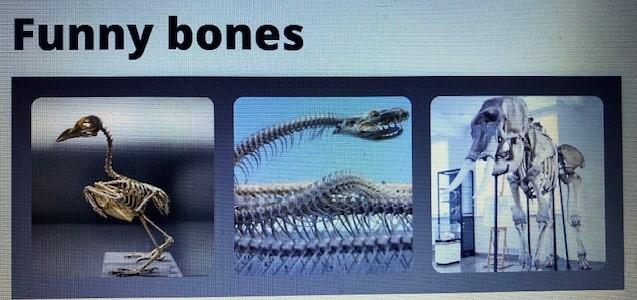
Collective class thoughts on what could be the odd one out.
Snake
- only one that doesn't have legs/feet/only one that moves by slithering
- only one that is a reptile
- has a very flexible spine and can coil right up
- it's spine is made up of many bones (between 200-400 vertebrae)
- it may have more bones than the others
Elephant (or is it a woolly mammoth?)
- it has tusks
- only mammal
- it has the biggest, strongest, heaviest bone
- it is the only one with 4 legs/ it is the only quadruped
- it has teeth
- could be the only one extinct now if it is a woolly mammoth
- maybe it has the least number of it's species left in the world
- it is the only one that doesn't lay eggs
- only one with ears on the outside
Bird
- only one that would have had feathers
- it cold fly
- only one with a beak/wings
- it has small bones
- birds have hollow bones
- it has claws
- it has 2 feet/ is a biped
What else could we have added?
RE - Developing a World View. What do you and others see in these optical illusions?


Forest Learning and Fun
-

The fir cone game was played today.
-

Work as a team, steal the fir cone and get back to base!
-

If you get caught moving go back to the beginning!
-

Den building
-

-

-

-

S'mores....yummy!
-

-

-

-

Getting creative.
-

-

There's always something for everyone in the forest to.
-

Sorry, only managed to take pictures of one group today.


Developing Mapping Skills - We looked on Google Earth at aerial views of the school to understand drawing with a bird's eye view.


Talitha was a beat boxing expert! We learnt many different rhythms and effects in the session. Who would have thought so many different sounds were possible?
Breakdancing was brilliant fun, if not a little exhausting and challenging, too!


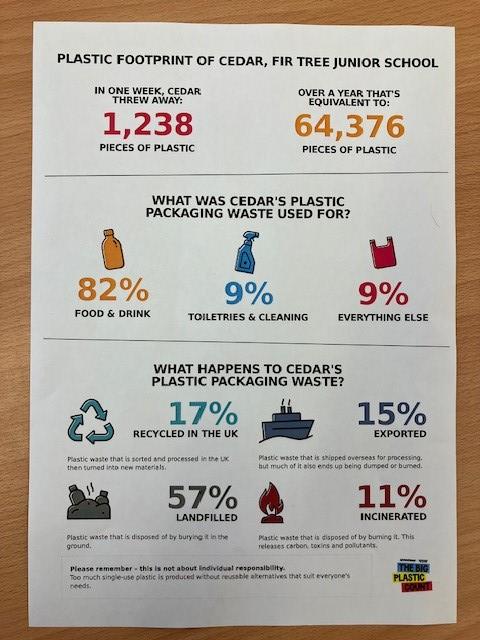
Kassim and the Greedy Dragon - story mapping to help us learn the story off by heart.
-

Key points of the story are drawn quickly.
-

Arrows can indicate the direction to follow on the map.
-

Key words can be added to help remember sentence starters or key vocabulary.
-

The maps are a quick reference to remember the story with confidence.
-

Then, tell the story with confidence and expression.
-

Actions and facial expressions, too!


Learning about a balanced diet, different food groups and nutrients. Can you name food examples containing different nutrients? Quiz your family at home.


Measuring in cm, m and mastering measuring non-straight lines.
-

Using string overcomes measuring curved or zig-zag lines.
-

Follow the shape carefully then measure the string.
-

Measuring given lines and drawing lines of a specific length.
-

Choosing best equipment for the job between rulers and metre sticks.
-

Knowing the units, how to record them with cm or m in a lazy mathematician way.
-

Being able to estimate lengths of lines and items.. Teamwork and cooperation.


Learning about the artist, Julian Opie, and recreating his style


Term 4 - 'May the Force Be With You' and Robots
Prints from collagraph


Magnetic magic trick and magnet strength testing


World Book Day 2024 - Visiting author and illustrator, Gary Northfield, shared top tips for creating and illustrating characters.


A fun PE session with Wallingford School Year 13 Young Leaders


Science - Attract or Repel?
-

Re-enacting how magnet behave.
-

A bar magnet has a red pole (north) and a south pole (blue).and a blue
-

Opposite poles attract which means that they are pulled in by the magnetic field.
-

Opposite poles repel, meaning it gives out a force pushing the other magnet away.
-

The game was to run around. When the whistle blew you had to find the closest person..
-

....and decide quickly if you had to repel or attract each other.
-


Forest Fire Fun!
-

First, a safety talk about how to keep safe and not set fire to yourself or others!
-

Then, we tried just getting a spark using a flint and steel fire starter.
-

Hooray! Everyone succeeded in getting sparks!
-

Next, we aimed the sparks at the cotton wool ball in a fire resistant oyster shell.
-

Pulling a cotton ball open allowed more oxygen to get in, increasing the chance of fire.
-

Six children succeeded but it took perseverance and determination!


Art - Robots


Writing - Developing word power by using a thesaurus!


Investigating friction
-

Today we made predictions, took measurements and explained our results.
-

Friction is a force that holds back the movement of an object.
-

Surfaces with a lot of friction needed to be lifted higher for gravity to pull it down.
-

Surfaces that didn't create much friction, it was easier to pull the car down the ramp.


Identifying forces - Miming actions and naming the forces


Exploring Pneumatics - Pneumatics is a Greek word meaning 'air' or 'gas'.


RE - What happens if we do wrong? The word 'immoral' is the opposite of moral and means unacceptable, unfair, wrong or dishonest.


Exploring fractions
-

We used a piece of paper and folding to explore fractions with equal parts.
-

First we made halves and quarters and counted the number of parts.
-

We explored the relationship between halving the paper and the resulting number of parts.
-

We used correct language like quarters not four or fourths.
-

Making thirds, (3 equal parts) was challenging but we persevered!
-

Folding the thirds in half again made sixths!
-

The total number of equal parts is the denominator (bottom number) of a fraction.
-

Can you rememebr the numerator and denominator dance?


Cricket


Music retrieval quiz - What can you remember?


IT - Exploring Coding with Angry Bird and Pig! Lots of children wanted to further explore this at home!


Exploring different sentence types and their effect


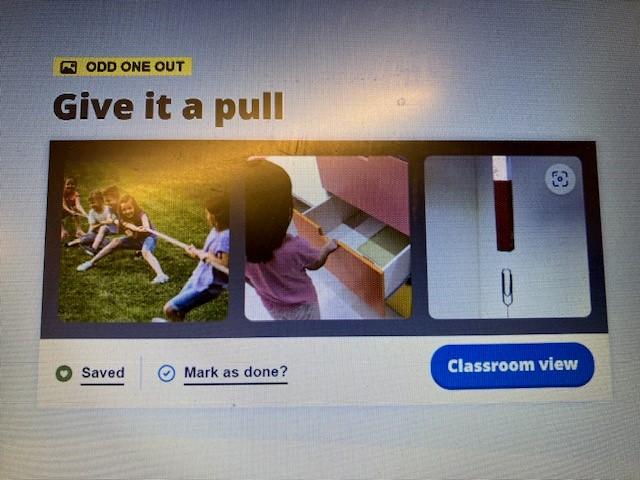
"Maybe the odd one out is the third one because 1 and 2 have humans involved. No-one is touching anything in number 3.
"Could it be the drawer because it is the only one that has a push and pull?"
"It's the one with the magnet because it is the only one with a magnetic force."
What other reasons could there be?


Term 3 Take One Piece and Romans
Our Roman Day


Finished Chariots


A fabulous visit to the Ashmolean Museum in Oxford!


A big thank you to Clare for coming in and sharing her expertise with us with talking us through some Roman artefacts and then leading our session on making clay Roman coins.


Our Roman Coins


PE - Gymnastics with Mr Mule. Here is a snapshot of what they have been getting up to in lessons.


DT - Starting the making process for our chariots
-

Problems, problems, problems!
-

Like all designers in the real world we each encountered problems and difficulties.
-

We had to learn how to overcome those problems and develop a problem solving attitude.
-

We learnt about the correct order to do things..
-

For example, it is hard to decorate something once it is stuck in place.
-

You have to be flexible and adapt plans.
-

Sometimes you have to assemble and disassemble things many times to get it right... -
-

it takes patience and determination to get it right.
-

We learnt many new skills along the way.


Finding out facts and history knowledge about Roman chariots


Design Technology - Designing a Roman chariot


Sequencing the Story of Romulus and Remus


Music - Our own composition for recorders
-

Rule - starting note must be a B.
-

Must follow the set rhythm.
-

Can only use notes B, A and G.
-

Piece must finish on a G semibreve.
-

Piece must be given a title.
-

Optional adding in a dynamic, either 'f' for loud or 'p' for quiet.
-

Practising ready to perform our composition..
-

Writing our music clearly was important.


Romans - What do we already know? What do we want to find out?


History - Learning about timelines and sequencing significant events of Roman history


Finishing off learning about Shadows from our project last term
-

A glorious, sunny, wintery day, perfect for learning all about shadows.
-

First we drew around our feet so we could come back to the same place later.
-

The first shadow we drew around in the morning was incredibly long! We looked like giants!
-

Two hours later, our shadows had moved and were now half the original size!
-

We observed that the sun had changed position in the sky..................
-

It was now further over towards the east and much higher in the sky.
-

The shadows were dark because we are opaque which mean we block most
-

of the light from getting through.


Take One Piece - Drawing and writing a response to the music we had listened to without knowing what it was all about


Give it a title
We had to create the best name for the music that we had heard. We had no idea what it was actually called. Why not listen to Anna Meredith's 'Connect It' and see which you think suits it best from the suggestions below. In class we talked about everyone having a different and individual response to what we had heard, therefore no suggestions are wrong! We talked about the need for capitalisation of the title and the possibility of using alliteration to make it catchy. We agreed that a short title would be more memorable than a long choice of words.
Puffy Penguins
Banging Sticks
The Terrible War Goes On
Roman Fight
Banging Fireworks
Kicking Rockstar
Bang Go Intrigued Indians
Roman Battle
Banging Romans
Dance Along
Battle Brothers
Loud Lane
Tango Dancing
Titanium Hero
Sound Wave
Battle Of Shipwrecked Boats
Cavemen Singing of Torture
Banging Drums
Clap Stomp Clank Boom
People Who Kill
Music of the Beat
Noise From the Jungle
Raging Fireworks
Developing retrieval skills from a text about Anna Meredith, the composer of our Take One Piece music called, 'Connect It'.


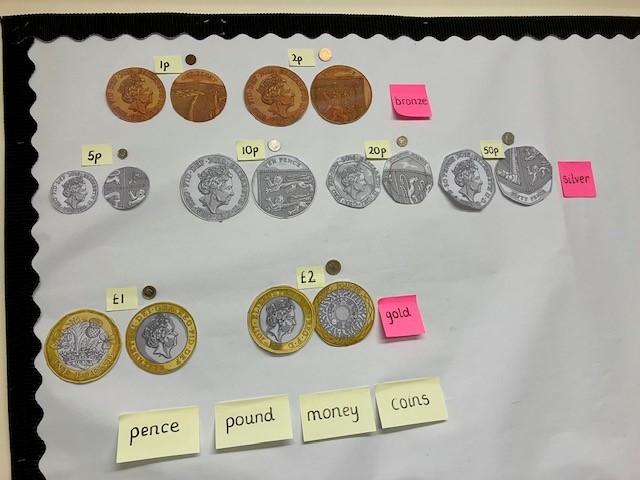
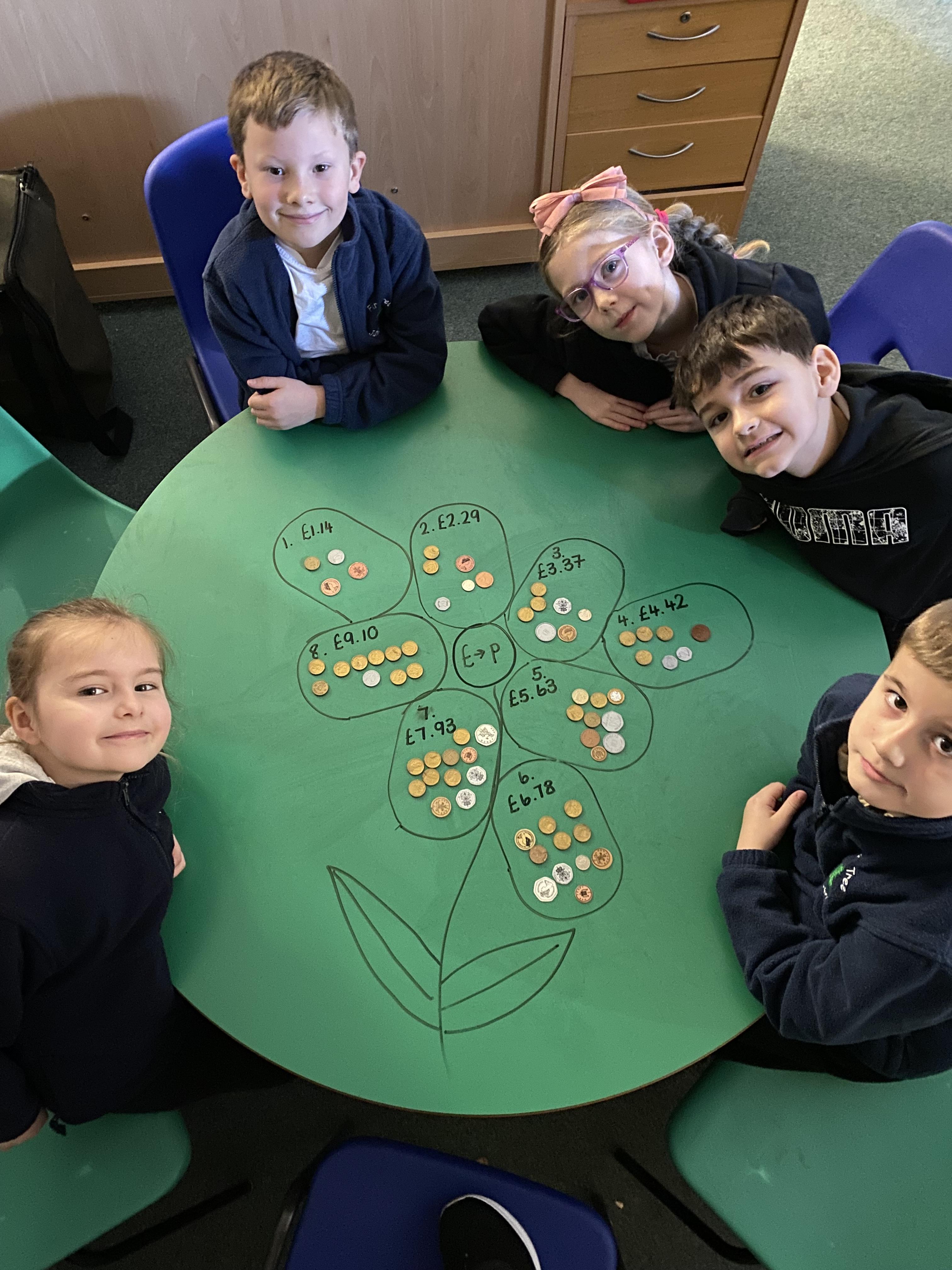
Can you identify all the coins by size, colour, and know all the values?
Extra forest Christmas session


Bouncing Santas


Finished Pop Up Cards


Thank you for your fabulous feedback. We couldn't be more proud of all the Year 3 children!


DT - Investigating and exploring pop up card designs. Thinking about what a professional looking pop up card needs.
-

Considering cutting, folding, gluing skills and how to make them look professional.
-

Identifying need for an attractive design - it must be aesthetically pleasing.
-

Use of space and layout is an important consideration
-

Need for legible and correctly spelt words
-

Having a go helps us to identify problems and to overcome them through practise.
-

Using scrap paper to hone skills means we don't waste expensive resources.


Nativity preparations for Year 3


IT - Using PIC-COLLAGE to create a picture representing ' Jesus' Christmas Party' and ideas from our play.


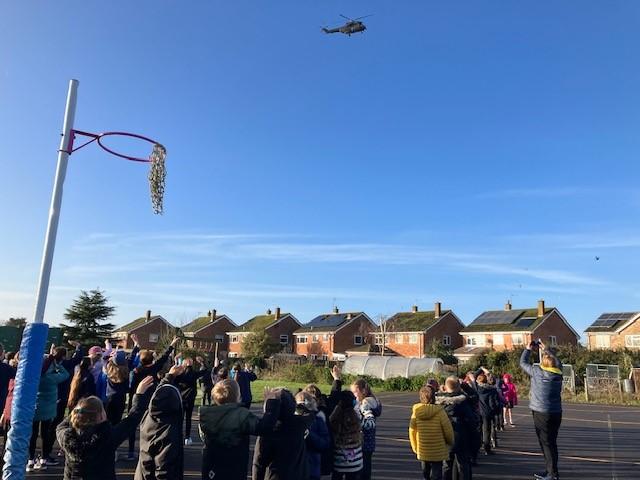
It is always exciting to watch Santa and the fabulous RAF doing a fly past.


Science - Sun - Is it a hero or villain?


Maths - multiplication and division
-

Do you know and use all the variety of vocabulary associated with X?
-

What about the division sign?
-

We adapted the '11' game to practise our 3x table. Ask your child how we play it!
-

Can you create, draw, represent and write number sentences accurately?
-

These are some of the questions we have been tackling.
-

Can you explain your thinking like an expert mathematician?
-

It's OK to work practically if that helps you to learn best.
-

-

-

-

-

Is it correct sometimes, always or never? Prove it with more than one example.


Dance Workshop with Cameron - Learning a dance routine to 'Stick It to the Man' from School of Rock


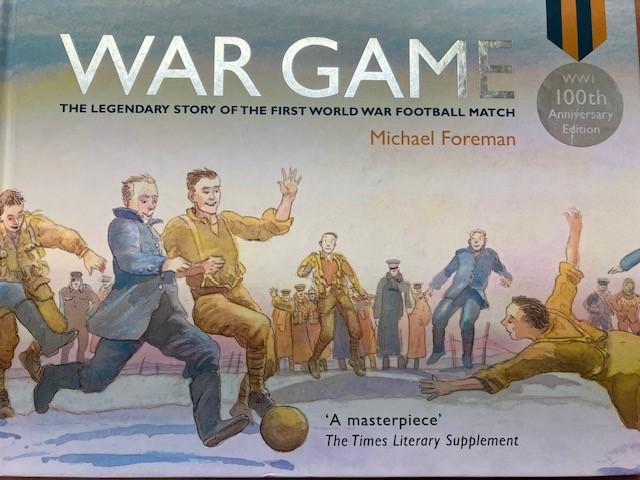
Over several days, we read 'War Game' and reflected on what it was like in WW1. From the excitement of signing up to the army thinking that an adventure lay before them, to the angst of their parents watching their children leave, to fear in battle, camaraderie, trauma of losing loved ones and much more. A football game brings people together despite everything. There is so much to reflect on in this wonderful book.
Making lighter and darker shades with watercolour paints
-

Use the palette tray to mix the shades.
-

Add white a bit at a time to make a shade lighter.
-

Add black a small amount at a time to make it darker.
-

How many different shades can you make?
-

What would an artist call all the different shades on paint sample charts?
-

Use adventurous vocabulary for colours in your writing!


What would happen if we didn't have mirrors? What impact would it have on lives as we know it?
We couldn’t see what we look like. Keira
We could never see our faces and whole body. Talitha and Theo
We wouldn’t have angles. Sienna (reflection)
People wouldn’t be able to do make up themselves. Eva
No-one could see to put their hair up. Keira
People couldn’t play mirror mazes. Sienna
We need mirrors to look at and fix the underneath of cars. Margot
Mirrors are needed when brushing teeth to check you have cleaned them properly. Juliette
We couldn’t reverse properly in cars - we would crash! Tristan
Dentists use mirrors to look at the back of your teeth. Nieva
We wouldn’t have kaleidoscopes. Talitha
Art - Creating different shades


Science - Investigating which materials are reflective?


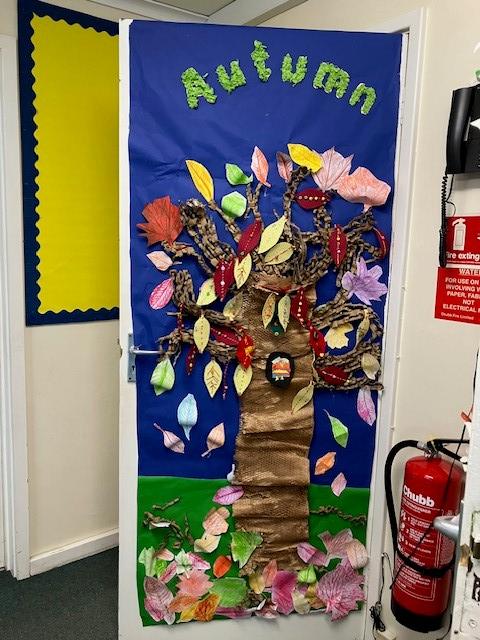
We thoroughly enjoyed the door challenge in Cedar Class!
The class wanted leaves, lots of different coloured leaves on an autumnal tree with some wildlife.
We set about making sewn leaves, embellished with beads and buttons. to further develop our sewing skills. Children chose autumnal coloured threads and accessories. Every child made a sewn leaf.
To generate even more leaves we did leaf rubbings with crayons and pastels. There were exclamations of, "It's magic, it really is!" going around the class. These leaves were cut with an emphasis on professional cutting. Some people even looked closely at the leaves, especially the veins, and created observational drawings.
The finishing touch was an owl sat in the tree. Thank you Holly!
We really enjoyed the collaboration in this project. We have received lots of praise from other children and staff for how colourful and attractive it looks.
Have a look at the Arts web page to see all the doors from across the school.
Door challenge preparation


RE Learning about Diwali, the festival of Light


In India, one of the most significant festivals is Diwali, or the Festival of Lights. The festival of Diwali is as important Diwali to Hindus as Christmas is to Christians. It's a five-day celebration that includes good food, fireworks, coloured sand, new clothes and special candles and lamps.
- Day 1 People clean their homes and shop for gold or kitchen utensils to help bring good fortune.
- Day 2: People decorate their homes with clay lamps and create design patterns called rangoli on the floor using coloured powders or sand.
- Day 3: On the main day of the festival, families gather together for Lakshmi puja, a prayer to Goddess Lakshmi, followed by mouth-watering feasts and firework festivities.
- Day 4: This is the first day of the new year, when friends and relatives visit with gifts and best wishes for the season.
- Day 5: Brothers visit their married sisters, who welcome them with love and a lavish meal.
In the story of Rama and Sita, light symbolises the victory of good over evil when King Rama defeated Ravana. Rows of clay lamps lit their way home.
What does light mean for you? We discussed how light makes some of us feel safe and warm. It gives some people hope.


Writing - Halloween poems


PSHE One of the warm up games we played recently...... there was a lot of laughter!
-

The Farmyard Game - 3 people make one animal
-

Pig = snout and 2 ears Cow = horns and 2 patches
-

Duck =beak and 2 wings.Speed and quick thinking is needed. Sound effects are compulsory.
-

Make the animal quickly when your name is called. Get your team on board!
-

Passing the talking object in lessons - showing the value of respect by listening to all.
-

Discussing ideas about scenarios in groups and feeding back to class discussion.


Stone Age Cave Art
-

A brilliant book on our project, and information about cave art findings in France.
-

Thinking about the reasons behind cave art. What messages were being conveyed?
-

What were the most important things to communicate and why do you think that?
-

Sharpie pens and brown paper. Scrunch up once finished to give it an old cave look.


History and Art - Learning how to make Stone Age dyed cloth


People from the Stone Age are thought to be the first humans to wear clothes. They made things like trousers, tunics and cloaks. Animal skins
were stretched out and scraped clean. The clothes were cut out from hide and holes were made around the edges of each piece so that it could
be sewn together using a bone needle. Later in the Stone Age, people started weaving cloth which was coloured using natural dyes such as flowers,
bark, seeds and leaves. This led us to have a go at dyeing some muslin cloth. We used a hammer to press down to extract the colour - we could hear a slight 'crunching' sound and then quickly saw that the dye had been pressed onto our cloth. We removed any residue of leaves and berries and then rinsed it in cold water. It was then left to dry. Some leaves and berries were more effective more than others because of their vibrant colours and due to their texture and moisture content.
Drama - Getting into role as 'Ug', a character from The Stone, in a hilarious picture book by Raymond Briggs.


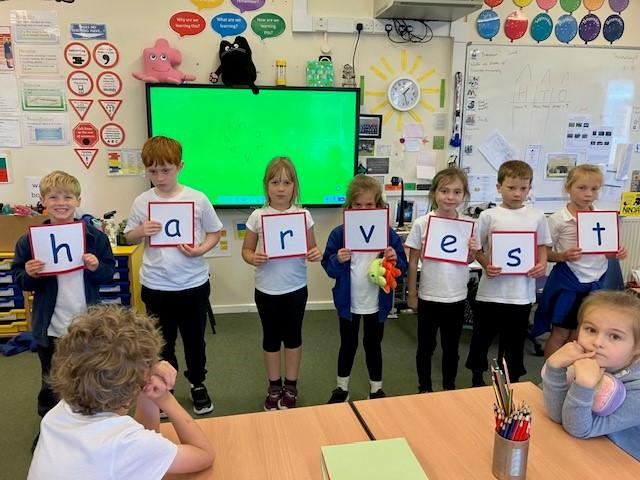
Thoughts about Harvest and harvest related words were made from harvest.
Art - Using charcoal to explore cave painting


Do you form your numbers correctly? Correct formation helps your work to be read accurately.


Music - Learning the recorder
-

Our 'Steps to Success' - Use a gentle breath - like making a candle flicker!
-

Use your lips and not your teeth!
-

Keep your recorder close to your body, not out front like a trumpet!
-

Keep your fingers flat not scrunched. Cover the holes with your 'pudgy' finger tips.
-

Left hand goes at the top. Check with the picture on the wall in the classroom yourself!
-

Note B = thumb and top finger - 'pinchy crab claw'. Cover the holes!
-

Note A is lower, use the same as B plus the next finger over the next hole.
-

Make a nice sound!
-

The first piece we learnt. We couldn't fall into the traps which were the minim rests...
-

It is important that everyone plays the silence correctly which is harder than you think!


Project work - making a project page about what we have learnt.
-

Stone Age people were 'hunter gatherers'.
-

They moved around in search of food in the Old Stone Age.
-

Weapons like spears and axes were made from wood and stone to kill wild animals.
-

It is thought that dogs may have helped people to hunt.
-

Nuts, berries, dandelions and nettles were all eaten.People only drank water.
-

Meat was eaten raw until the New Stone Age.


Letter formation - Mrs Bones lets them write on the table!!!!!!


'Afterward, Everything Was Different' by Rafael Yockteng and Jairo Buitrago. An amazing book plus a bonus observation in mark marking skills! So much discussion is being generated looking at this book together in class, with differing views, thoughts and opinions.


Maths - Exploring number bonds to 10 and 20 through practical games and using equipment


Learning about the properties of rocks - finding out about durability, permeability and density through our own tests.
-

Could each rock be eroded with sandpaper?
-

This recreates the erosion by wind and rain.
-

Is each rock permeable (letting liquid pass through it)...
-

or impermeable (not letting liquid pass through.) We used syringes filled with water.
-

Do rocks float or sink?
-

Rocks are generally denser than water.
-

Some of our thoughts after the experiments.


Gardening with Mel
-

Raking over the ground, preparing it for some seedsThe ground is in a nice sunny spot!
-

Making the soil fine and crumbly.
-

Sowing the seeds on the surface.
-

Pressing them back down.
-

They will need watering in dry weather.
-

The flowers that grow will provide food for bees and butterflies and other insects.
-

We can wait patiently for these flowers in the spring and summer...
-

..marigolds, cornflowers, corncockle, poppies and chamomiles.
-

Thank you Mel!


First Forest Session


In our first forest session with Lizzy today, we were introduced to 3 important ideas.
We must look after ourselves, each other, and the forest and it's inhabitants.
We were given a tour of the different forest areas - fire circle, mud kitchen, screen or performance area, music area, mud pit, and two camp making areas.
We were shown how to carry sticks and much larger logs and palettes safely. We were asked to only please get mud for the mud kitchen from the mud pit, otherwise digging holes on the paths could make them dangerous. Also, no gun play please in the forest!
The groups were given free time to explore the area for themselves. The mud kitchen was particularly popular with all sorts of potions, soups and medicines being concocted!
Water colour technique creating sunset or dusk and silhouettes of Stonehenge which we have been learning about in our reading sessions.


'Taking a line for a walk' and further exploring mark marking including adding colour


Practising different types of sentences. Can you come up with your own ideas using these structures?


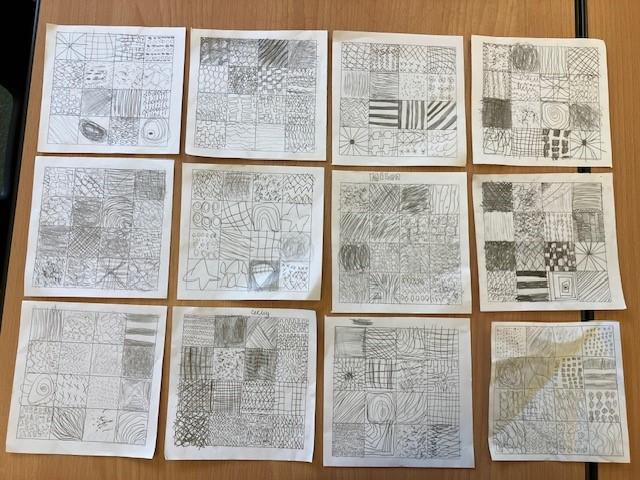
We have been exploring mark making techniques to create interest and texture.
The Iron Man - Sunsets and Silhouettes
-

First, we used block paints to create a sunset. Colour mixing was needed.
-

We had repeatedly read the opening of the story to create images in our heads.
-

We considered body positions the Iron Man would be in....
-

...at the top of the cliff.....
-

...as he was falling...
-

and at the bottom of the cliff when he was scattered around in different pieces.
-

We practised our drawing first and made a template to cut around.
-

We made sure no pencil marks showed on the paper by turning it over.
-

Each picture is unique!


Writing Kenning Poems
-

We found out about kenning poems and generated 'steps' to success' for writing our own.
-

Each line has two words only so it is important that they have impact and effectiveness.
-

The second word on each line ends usually in an ' -er'
-

Repetition of words, we all agreed , would weaken the effect.
-

'Ninja' vocabulary was brainstormed and shared.
-

We played around with different combinations for lines and evaluated their effectiveness.
-

Have you guessed what all our poems are describing?
-

It is a Roman soldier of course!
-

What lines would you write in your poem? Can you make up a kenning poem about your pet?


Design and Technology - Designing a Roman Chariot
-

We discussed the importance of labelling our designs.
-

Aesthetics, the 'look' of the chariot is important.
-

Our designs would need to be light.
-

A Lego figure, a 'charioteer', would need to be able to fit in.
-

The chariot would need to be fit for purpose, therefore strong and robust.
-

Something would be needed to connect the horses to.
-

A discussion was had about about 2 wheels or 4 and which would be better.
-

What could make the chariot look Roman?
-

Would some colours be more striking or relevant than others?
-

Would the chariot move over rough terrain?
-

What design would ensure the chariot could be fast?
-

Would aerodynamics be important to consider?


We looked at pictures of Roman coins and then tried to recreate our own modern day version of Roman coins.
Steps to Success included..
- large head - make it a feature
- side profile on the face, much like all our coins nowadays
- clay not too thick or thin - too thin and it will snap!
- smooth areas over with your finger if you make a mistake
- some Roman numerals on it
Did you know, some Roman coins would have been worth 400 asses!
Beautiful Pop Up Christmas Cards


"I predict the shiny foil will be the most reflective, it will reflect lots of light."
"The bubble wrap will be the least reflective because it is transparent, and the light will go through it."
"The dark materials will reflect the light the least."
"The yellow paper reflected onto the light catcher card and made it look yellow."
"The smooth ones will reflect the light."
"People wear fluorescent colours like work men at night."
Surprisingly, the blue material did reflect some light."
What do you think? Whay not try out some more materials and different colours at home?
Some of the books we have been sharing connected to our projects about rocks, fossils and the Stone Age
-

Boy is taken back to the Stone Age when the ground gives way. What does he see and learn?
-

We used this text to explore the differences between modern day and Stone Age life.
-

Would you liked to have lived in the Stone Age?
-

How would you cope without the luxuries of today? What would you miss?
-

Ever thought about the life of a pebble and how old it is?
-

We used this text to think about how instructions are written.
-

Learning about these magnificent stones and wondering how they got there!
-

A light hearted and humorous text.


How did people communicate ideas in the Stone Age?
What ideas did they want to communicate?
What did people use before paints, pencils, pens and sketch books or paper?
What things were important to people living in the Stone Age?
These were some of the ideas we considered prior to beginning our artwork using large paper, charcoal and our hands only to recreate Stone Age art.