Fir TreeJunior School

RE
At Fir Tree Junior School, we follow the Oxford Diocese Board of Education Scheme of Work, which is based largely on the Pan-Berkshire agreed Syllabus.
Learning about Christianity forms the main part of the RE syllabus, in accordance with National Guidelines. In addition, other world faiths including Judaism, Hinduism and Islam are also taught. Through celebrations in assemblies and embedding school values, festivals from other cultures such as Chinese New Year and Holi are also covered.
Each unit that is taught has a 'big question' in which the children are encouraged to 'Engage, Enquire, Evaluate and Reflect'. The lessons may not necessarily be taught in a linear fashion and that in order for teaching to ensure depth and progression, 'the DFE recognises that progress in RE is not likely to be linear'. In accordance with guidelines, we at Fir Tree ensure that the curriculum offers opportunities to re-visit and deepen understanding of core concepts.
Please find the RE Policy that outlines our aims for teaching RE and other useful documents that gives further information on the teaching and learning of Religious Education.
Information for Parents about the RE Curriculum
Hanukkah
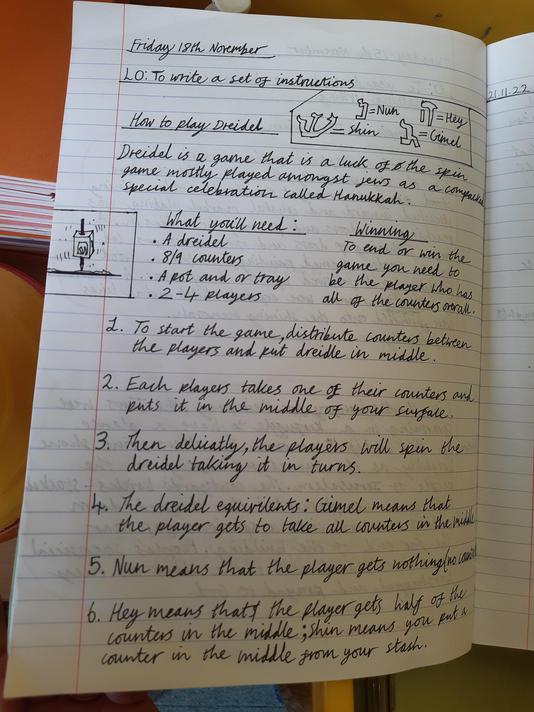
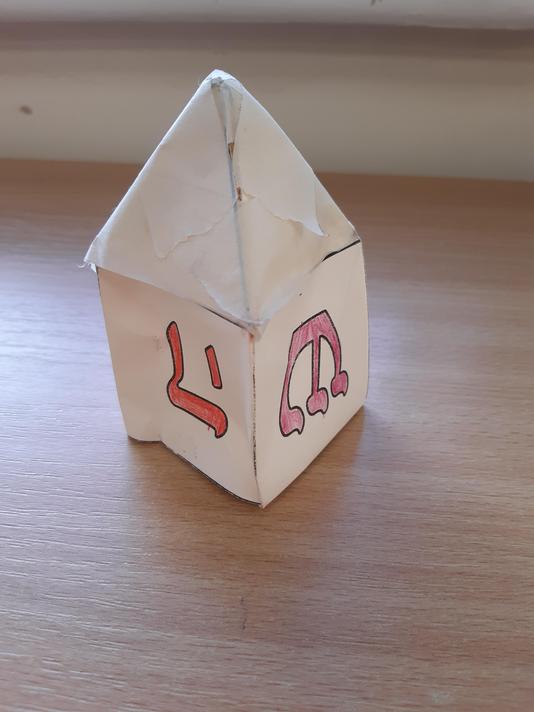
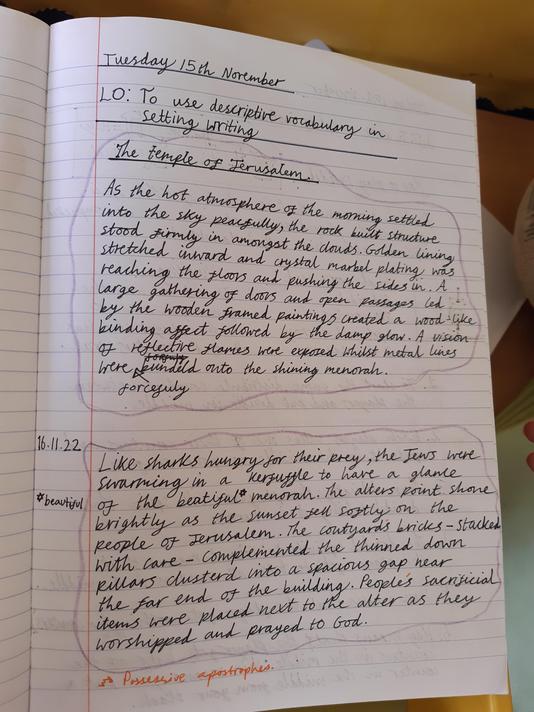
In Year 6, we have been learning about traditions during the Jewish festival of Hanukkah. One of the most popular traditions is making oily foods. These foods are cooked in oil because of the story of oil outlasting its one-day capacity and burning for 8 days instead. The Jewish people therefore make sufganiyot (jam doughnuts) and latkes to remember this story. We decided to take this one step further by firstly designing our own doughnuts and then matching them to the designs. They then created packaging for their doughnuts and evaluated the process at the end of the mini-project. In addition we played a popular game played by Jews during Hanukkah - the Dreidel game. In order to play this game we had to learn the rules and then have a go ourselves! We then write the rules down and created a 'How to play the Dreidel' that could be followed by others.
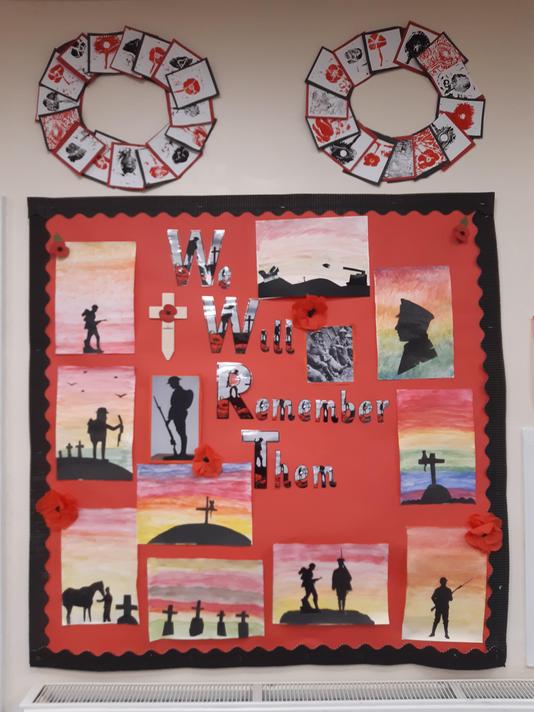
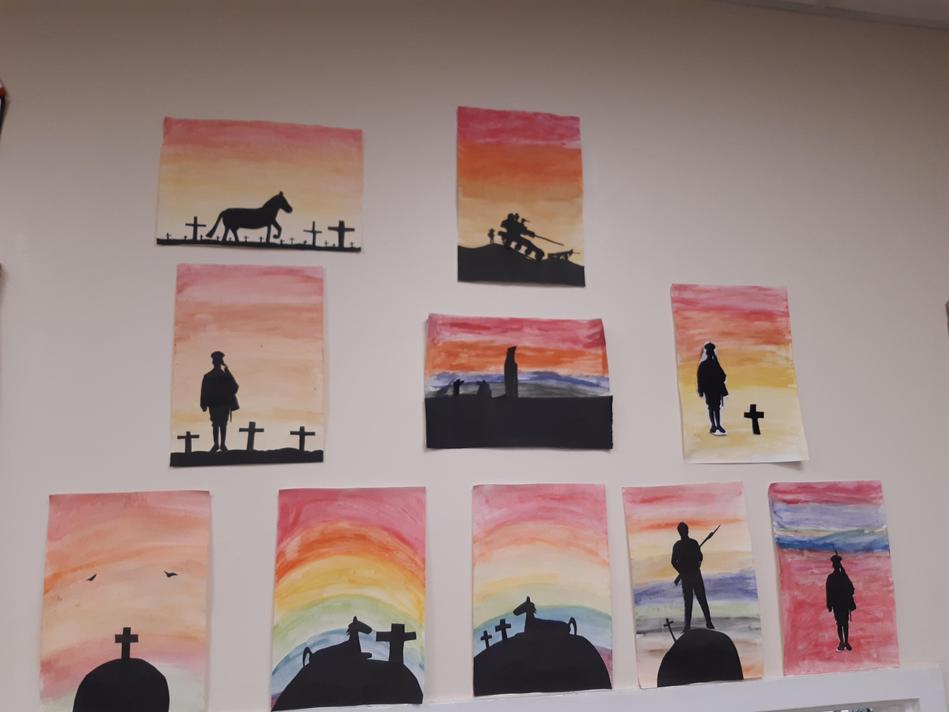
Remembrance 2022
Throughout the school, classes have been marking and researching remembrance in different ways.
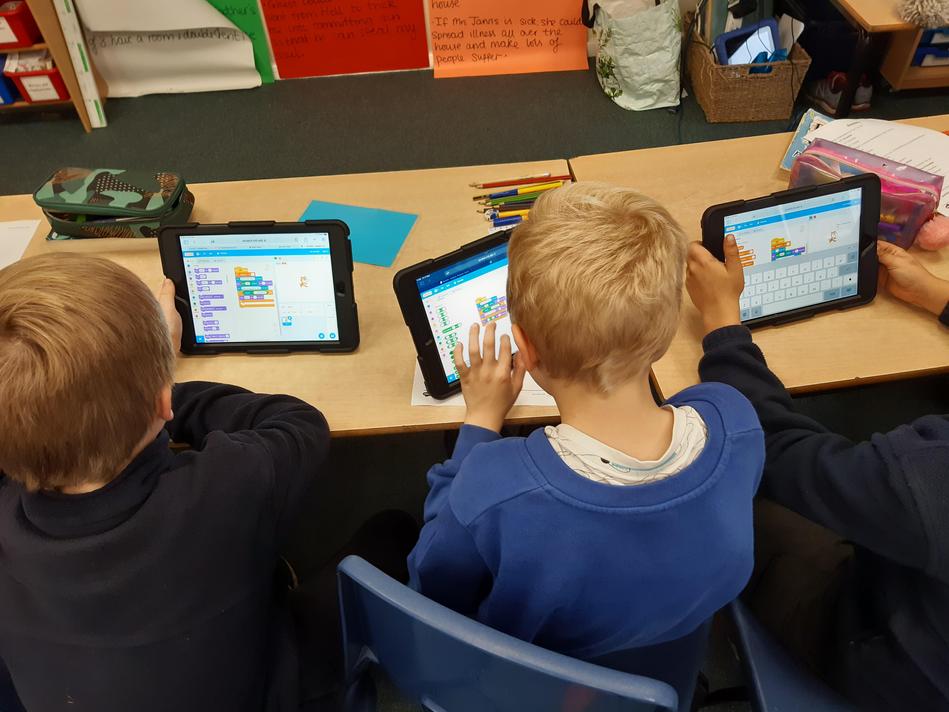
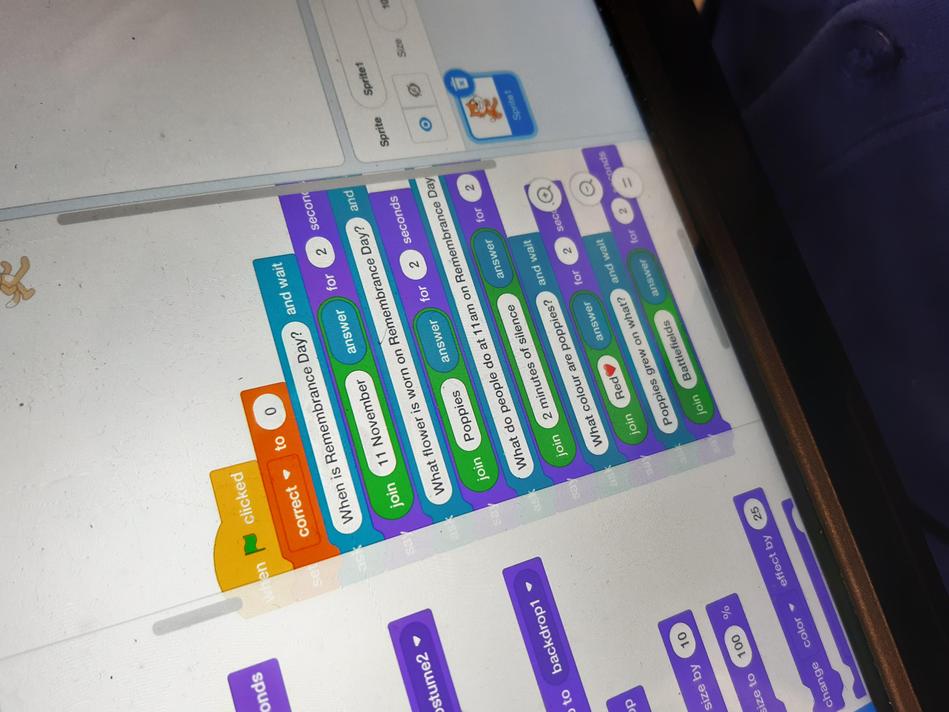
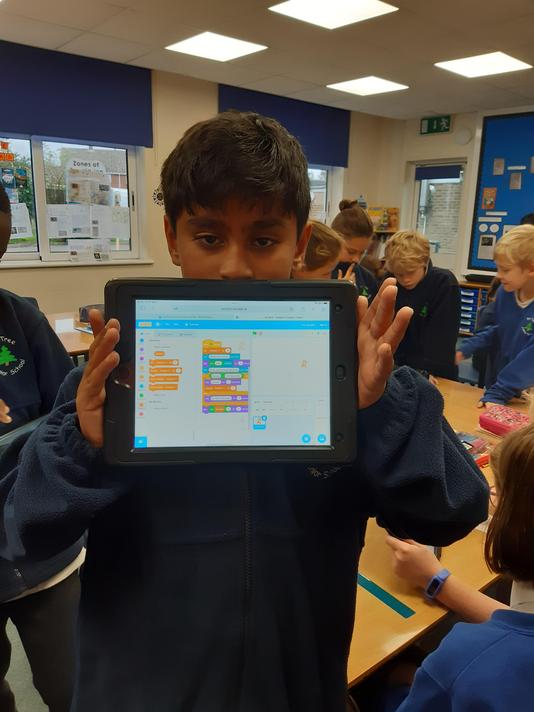
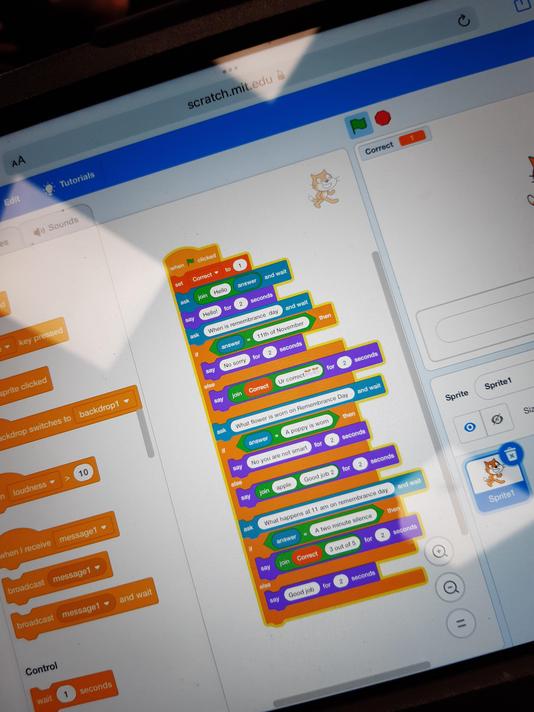
In year 5, Chestnut researched remembrance through Newsround and created a quiz using scratch. Many found it difficult to start with following the step by step instructions for programming. However, everyone persevered and produced quality playable programming that they were proud of. They are already looking forward to creating their next quiz.
Year 6:
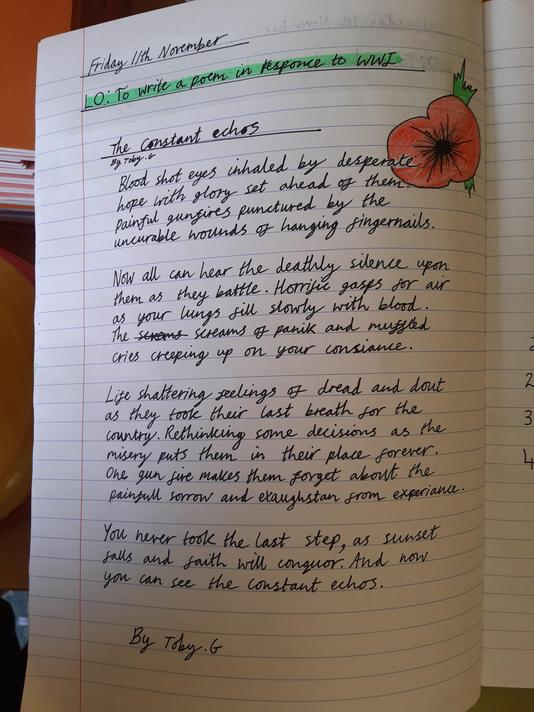
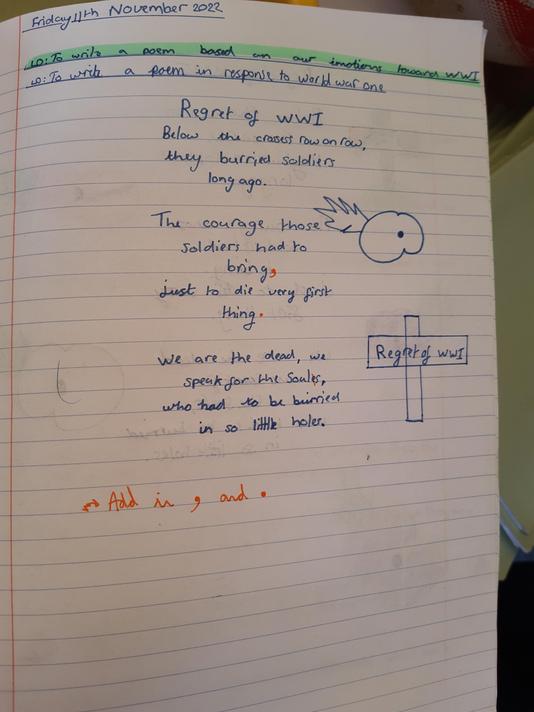
This term our project is World War I. We have been learning about the causes of the war and several of the crucial parts such as the trenches, women's roles, the Battle of the Somme, propaganda, and training for the war. In Year 6, we read poems such as 'In Flanders Fields' by John McCrae, 'Dulce et Decorum Est' by Wilfred Owen and 'The Owl' by Edward Thomas. We were amazed by how different they all were and the impact they each had on us as readers. Many felt the guilt and anguish in 'The Owl', almost everyone felt the shock and horror of 'Dulce et Decorum Est' and the sadness and longing of 'In Flanders Fields'. In response, we wrote some poems of our own.
Rev Rice joined us for his final visit at Fir Tree before he retires. He explained the importance of words and to think before we speak. Using tooth paste as an analogy, he demonstrated that tooth paste is very easy to squeeze out but extremely difficult to push back in. Children learned that it is important that we show kindness to one another as issues can arise if we are not careful with our choices.
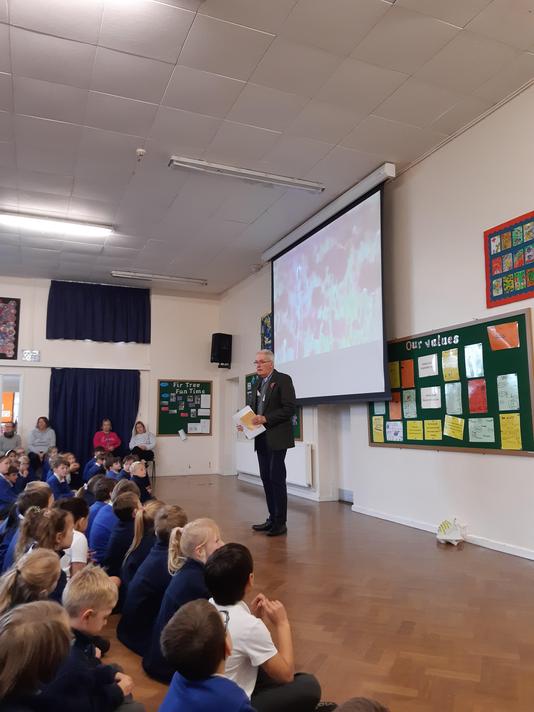
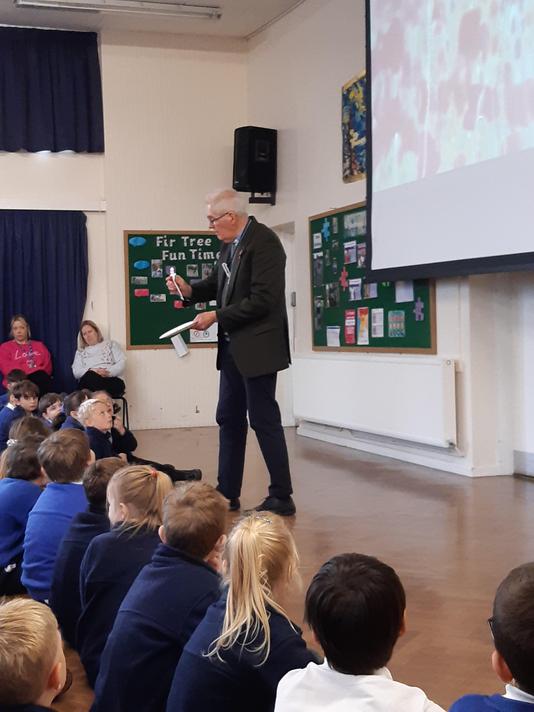
We wish Rev. Rice all the best with his retirement.
Divali 2022
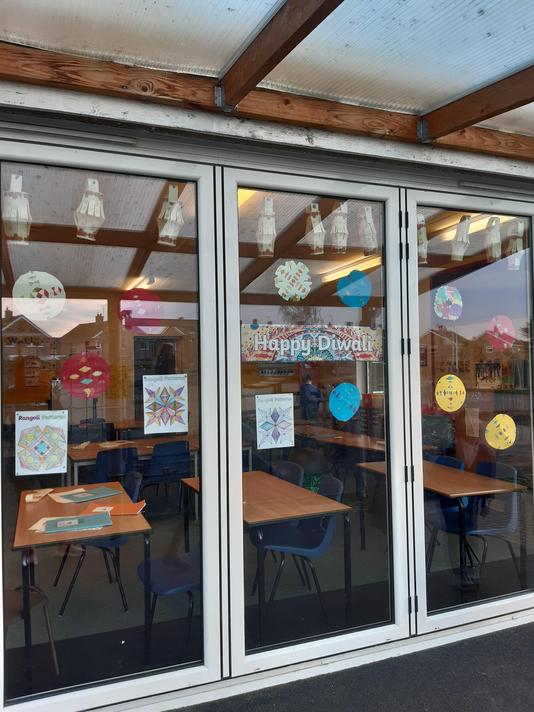
As part of Year 3's light topic, the classes have been exploring religious events and the importance of light. The children learned through the story of Rama and Sita that good is more important than evil as well as lessons of perseverance and commitment to those we care about. Light became significant to help lead Rama and Sita home from their quest. Nowadays, Diwali honours the Hindu goddess of wealth, Lakshmi. The lights and lamps are said to help Lakshmi find her way into peoples' homes, bringing prosperity in the year to come!
Willow class were particularly excited to create brightness and light through their rangoli patterns, lanterns and window art to create a colourful display.
Harvest 2022
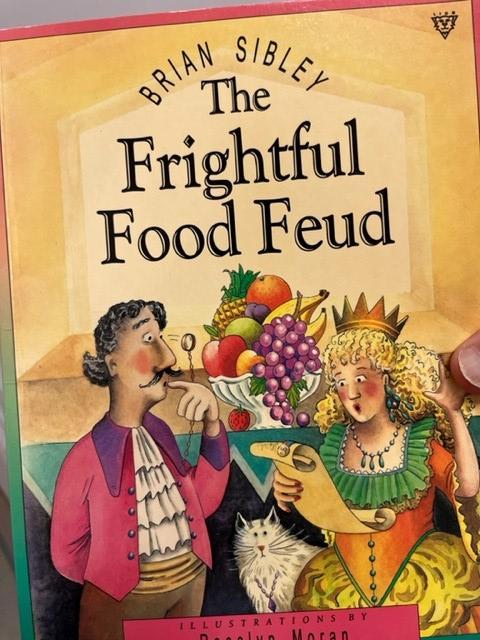
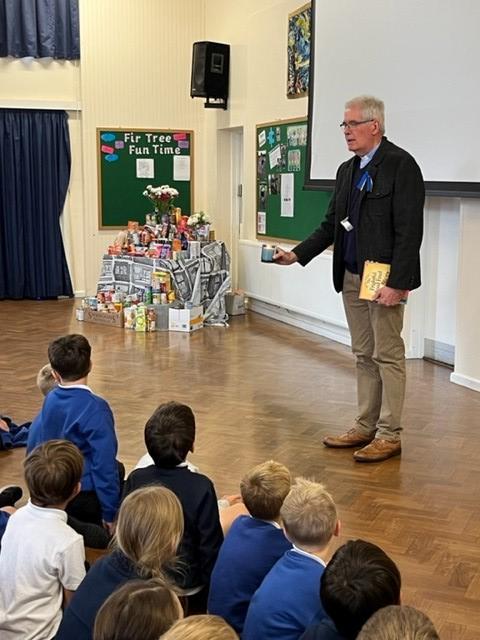
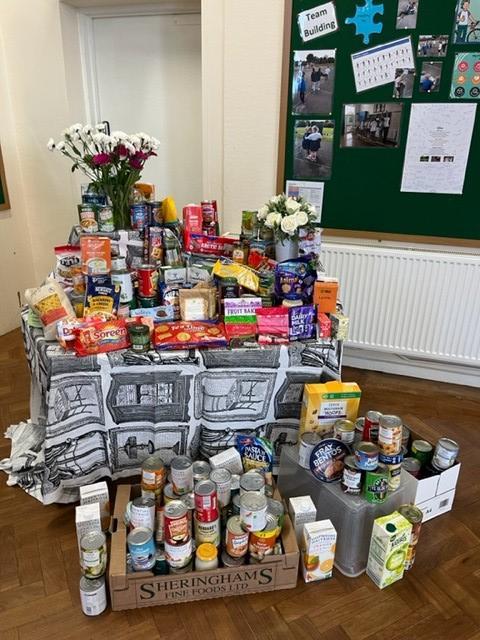
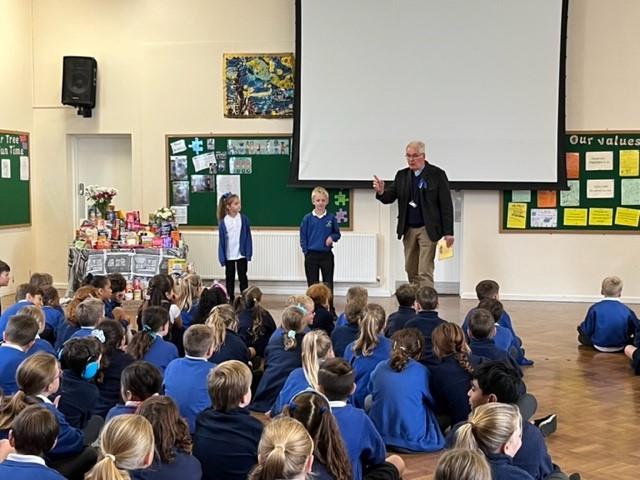
Reverend Rice was welcomed back to Fir Tree since the pandemic and the school were treated to an inspirational story linking to our theme of Harvest. The Frightful Food Feud story was acted out by volunteers to express the importance of sharing food and resources to help others. All classes shared their research on Harvest creating poems, making observational drawings and explaining what Harvest time means to them.
Thank you very much for your generosity in giving so much food to Wallingford Foodbank.
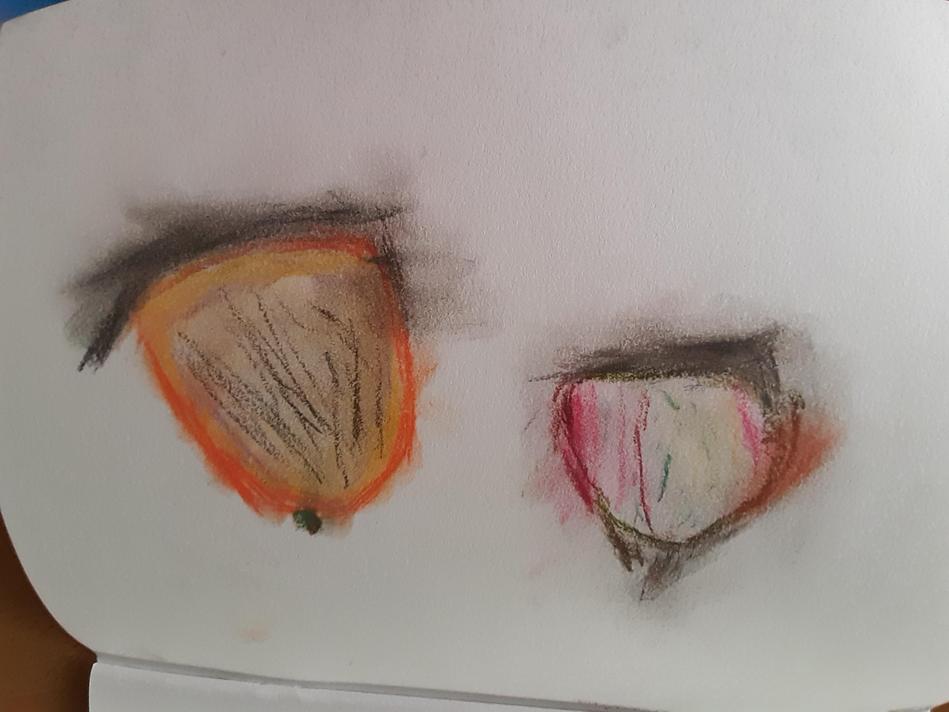
Year 3 produced some lovely still life pastel sketches of harvest fruits. They focussed on different techniques including sharing, blending and using lines. As you can see the children really worked hard and created fantastic drawings.
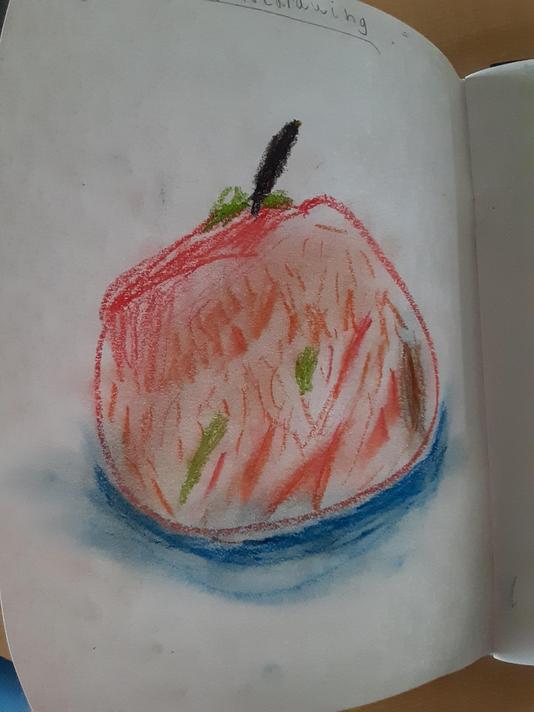
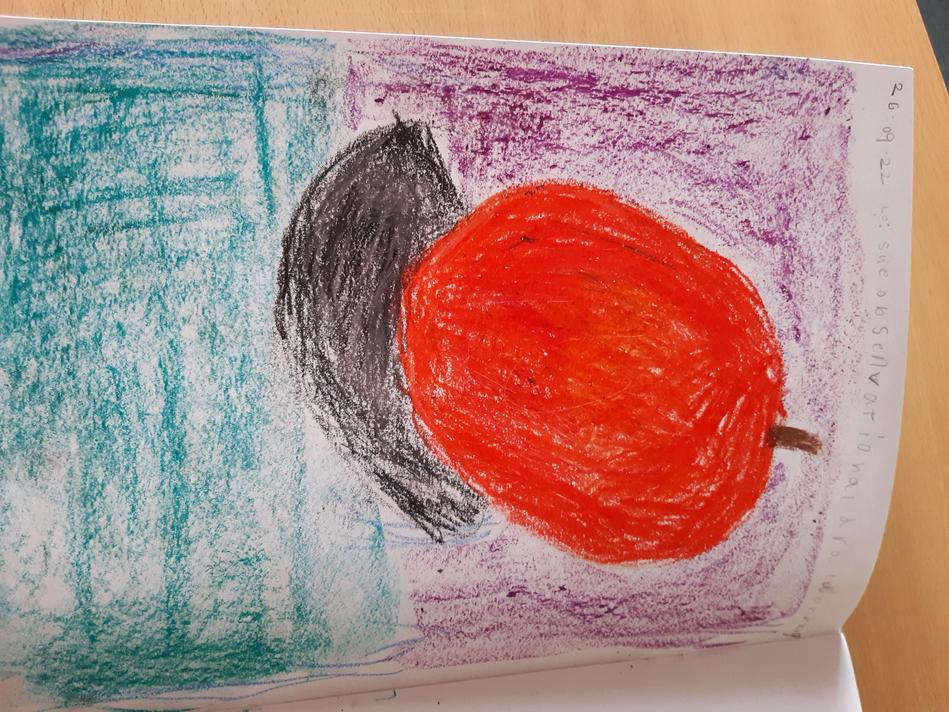
Harvest Work 2022
Christmas 2021
Unfortunately due to Covid restrictions, we were unable to enjoy an assembly from Reverend Rice this year.
Instead he very kindly sent the school a short video to watch on the meaning of Christingle
He also sent instructions on how to make a Christingle orange as well as setting a challenge for the children to think of all the different ways they could bring hope to others at this time of year.
Diwali 2021
On Thursday 4th November, Diwali was celebrated all around the world.
Diwali is the Hindu festival of lights.
The children at Fir Tree were reminded of the famous story of Rama and Sita and how on their return to their kingdom, they were guided by little lights.
Lower School explored why Diwali is celebrated.


Upper School focused on the question What does the Festival of Diwali mean?


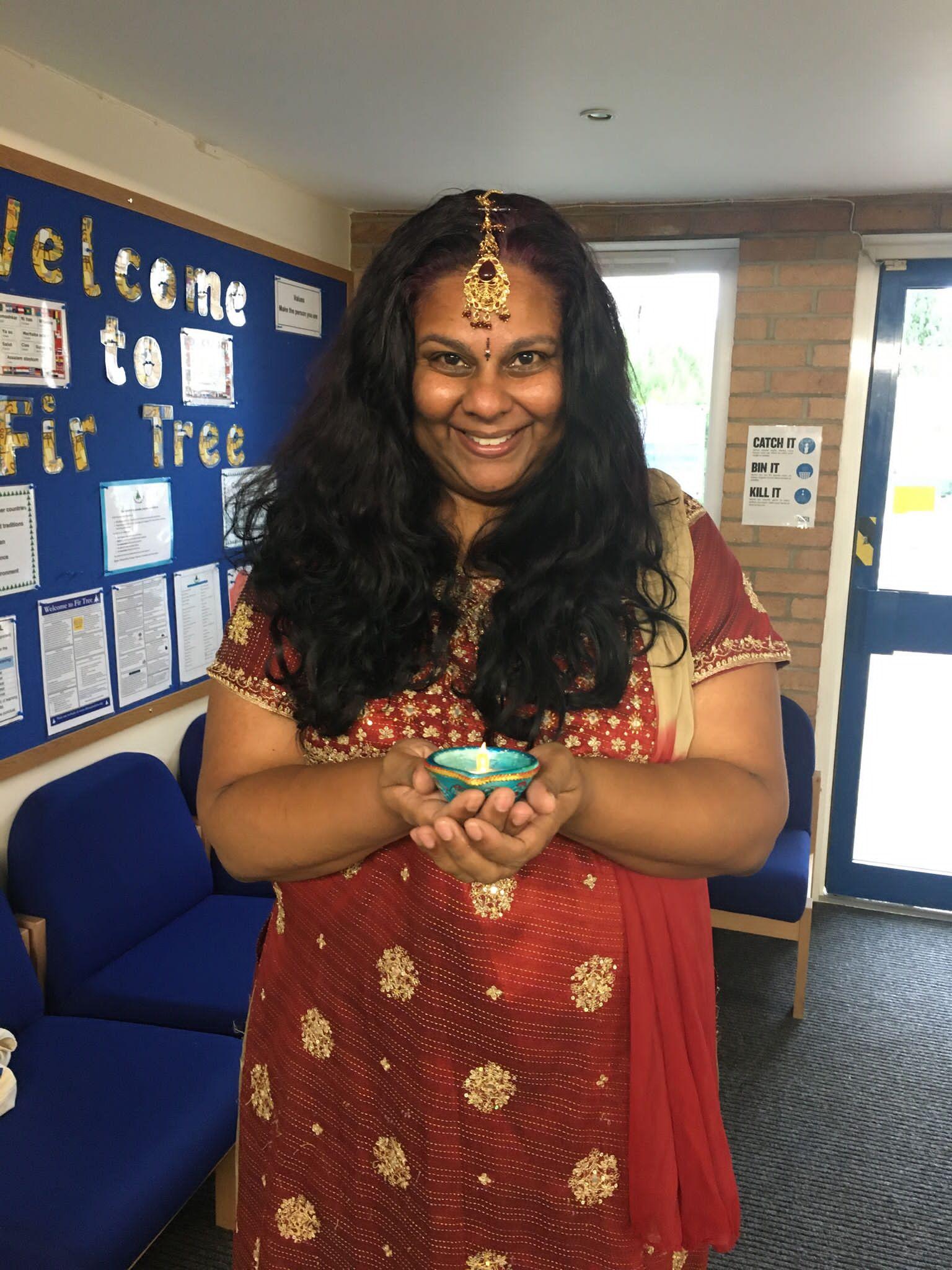
How wonderful it was to see Mrs Holley wearing traditional dress and celebrating Diwali.
The children were so excited and were bursting with questions about how she would celebrate the Festival of Lights
Harvest 2021
Due to Covid restrictions, we were unable to have a Harvest Assembly with Reverend Rice this year.
However each class enjoyed learning about Harvest in their lessons.
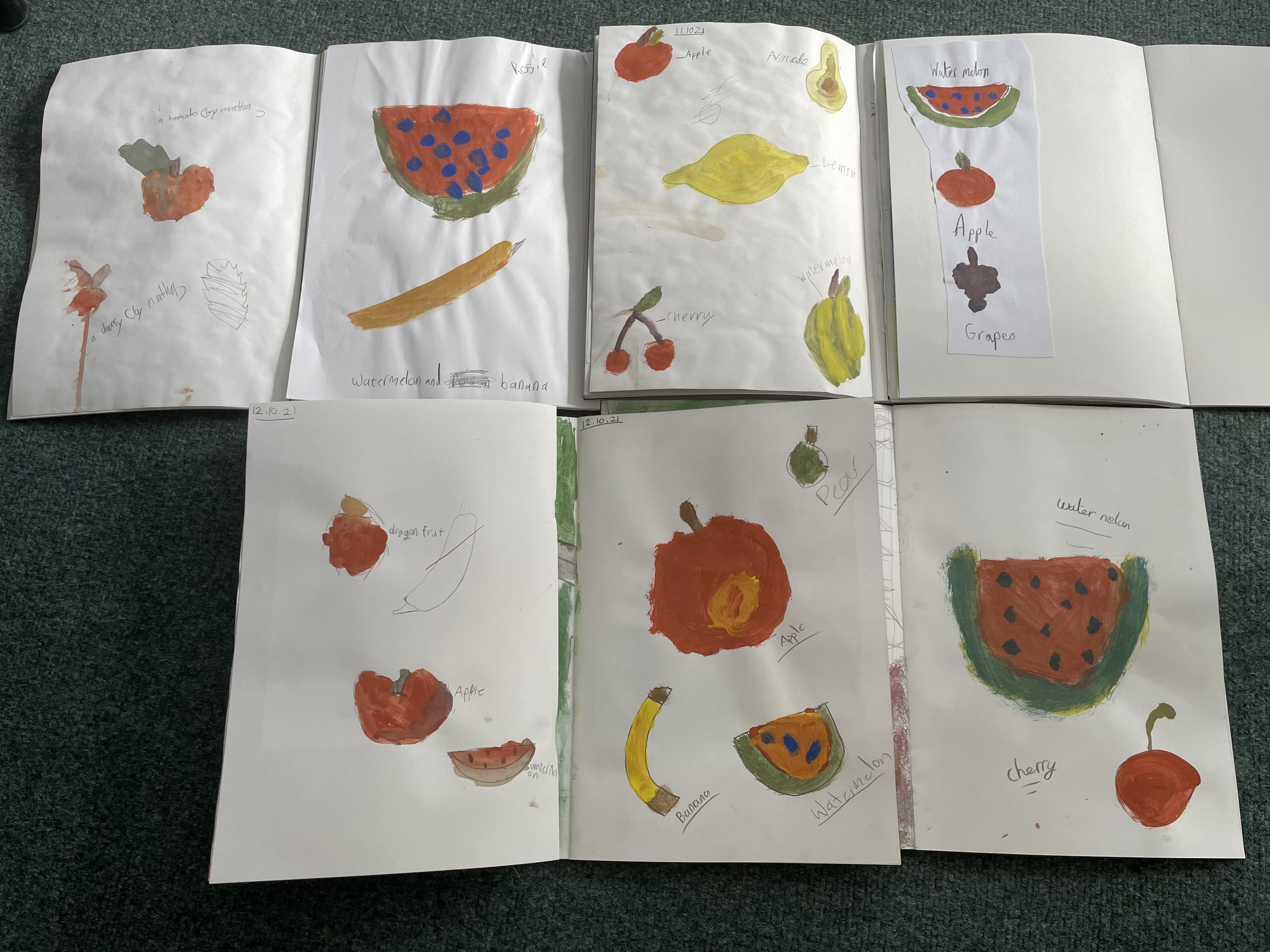
Ash Class decided to paint some pictures of fruit and vegetables
Sycamore Class wrote some Acrostic poems about Harvest


RE Term 1 2021
Ash Class
This term we have learnt about the Hindu Gods, the festival of Ganesha and the 10 avatars of Vishnu.
Please see pictures of what we have done.
For the Gods, we learned about the 3 main Gods and then each child drew their own picture of one of the Gods.
For the festival of Ganesha, we learned about the festival and wrote our own bullet points summarising the festival.
For the 10 avatars of Vishnu, we created a 10 section comic strip style for each one.


Maple Class
Our RE project was exploring how and if Murtis help Hindu’s understand about God. Murtis are the colourful figures and pictures of the deities found at Hindu shrines and temples. These figures usually form the focus for prayer, as they are believed to be filled with spirit of the god they represent. Each Murti represents one of the deities and are identifiable by the symbols surrounding them as well as certain physical features. We explored the ideas of why different Murtis are the focus at different times. The story of the Blind Men and the Elephant helped the children understand about the different characteristics of each Murtis.


Sycamore Class
This term Sycamore Class have focused on the Qur'an
They have explored the role of Mohammed in the creation of the Qur'an. The children then explored its organisation, how it is used and the impact it has on Muslims


Ramadan 2021
Ramadan is a very special time for Muslims when they reflect and think of others less fortunate than themselves
During this month long period they fast meaning they go without food
Cedar class reflected on the meaning of Ramadan


Eid 2021
In our RE lessons we have been exploring the importance of a mosque to Muslims.
On 11th/12th April, Muslims around the world began a very important event on their calendar, that of Ramadan.
During this special time, they fast meaning they go without food.
To celebrate the end of Eid, after one lunar month, all Muslims celebrate Eid.
This is a time for great celebration :-
- family and friends get together
- everyone visits the mosque to pray
- people dress up in new clothes
- people decorate their hands and arms with henna patterns


Easter 2021
Reverend Rice very kindly sent all the classes an Easter message.
He also sent some other video clips to watch about the event leading of Holy Week
His assistant Hannah very kindly shared a video message showing us all how to make a Palm Cross
The children explored the events leading up to Easter Sunday.
Cedar Class used their drawing skills to create some pictures of the Easter story in the style of the author and illustrator, Brian Wildsmith.
The addition of gold paint and brightly coloured pictures in pastels make it quite identifiable as his style.
Cedar Class


Maple Class
This term Maple Class have explored Passover and the events of Holy Week leading up to Easter


Ash Class
After watching Reverend Rice's assembly message, Ash Class produced some wonderful storyboards about the Easter Story
They then used their 5 W's to reflect on their understanding of the meaning of Easter


Shrove Tuesday 2021
On Tuesday 16th February, it was Pancake Day, or Shrove Tuesday. This is a day when traditionally Christians use up all their rich fatty foods such as butter, eggs and milk and make pancakes. This is in preparation for Lent that begins the next day on Ash Wednesday.
We explored how Pancake day is celebrated around the 4 countries in the UK as well as some other countries in the world.
Here are some of our reflections:-
- I learnt the story of the woman who lived in Olney. As she was late for church, she ran there, still wearing her apron and bringing her frying pan with her.
- I remember watching the annual pancake race in Wallingford and now I understand why people toss a pancake whilst running along
- I learnt that Scottish people have a slightly different pancake to ours, called Drop pancakes


Lent 2021
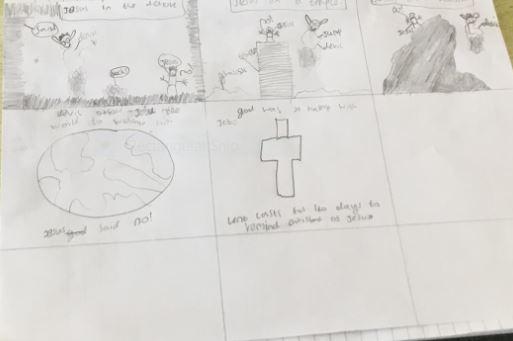
We learnt that Lent lasts for 40 days and represents the time that Jesus was alone in the desert. Whilst he was there, he was tempted by the devil 3 times. During Lent, Christians give up something that is important to them to remind them of the sacrifices that Jesus made.
Lent leads up to Easter and finishes on Easter Sunday.
In our group online sessions, we brainstormed ideas of what Christians may decide to give up for Lent. Here are some of our ideas:-
- electronics
- mobile phone
- sugar
- games
- play station
- chocolate
- unhealthy snacks
- plastic packaging
- you tube
- fizzy drinks
- coffee
- television
- lego
- the internet
- meat
We discussed that during Lent, Christians practiced three very important elements in their lives :- Fasting Giving Praying
We understood that Lent is a time when we can think about acts of kindness.
We discussed in our online groups and thought of the following ways we can be kind to others :-
- giving to a charity
- being supportive with a friend
- sorting out friendship issues
- asking 'how are you?' and 'how was your day?'
- being helpful around the house
- respecting other people's choices
- opening doors for people
- cheering someone up by paying a compliment
- being polite
- giving someone a hug
- putting others before ourselves
- lend someone something
- spend time with someone
- helping my parents go shopping
Lottie's Power Point about Lent
Chinese New Year 2021
On Friday 12th February 2021, the world celebrated Chinese New Year.
Each year is named after an animal after a famous story about animals having a race across a river.
2021 is the Year of The Ox
All over the world, people celebrate the new year by watching street processions where a dragon dance would be performed to scare away evil spirits.
Despite lockdown, classes explored the story behind Chinese New Year and explored the traditions associated with this festival.
Year 4


Year 5


Year 6


Christmas Message from Bishop Steven
The children in Sycamore loved listening to Bishop Steven's Christmas message that he sent to Fir Tree Junior.
He asked a special request of them; to send in their favourite jokes in order that he can possibly compile them into a book.
Click on the link below to watch his message
Christingle 2020
Reverend Rice very kindly sent in some instructions on how to make a Christingle orange. It is the Christian tradition to make a Christingle during Advent.
Click on the links above to view the instructions and his Christmas message
The children learnt that each part of the candle has a different meaning :-
Orange : the world
Red Ribbon : the blood of Jesus
Candle ; the light of Jesus
Cocktail Sticks : the 4 seasons
Fruit : the fruits of the Earth
On Sunday 6th December the Wallingford community was invited to join a virtual Christingle service in which people were invited to light their candle and display it somewhere for all to see.


Diwali 2020
During our assembly and lesson time , each class has been exploring the Festival of Light celebrated by Hindus known as Diwali.
The children discovered that this is one of the biggest festivals for Hindus and lasts around 5 days.
They also understood that many Hindus consider this to be the start of a New Year and a celebration of the return of King Rama. They really enjoyed the story that all Hindu children read at this time about how Rama and his bride Sita and wanted to see if they could spot any clay lamps that some Hindus may have lit in their windows around the local community.
The children all recorded their learning in their RE books.
Click on the link above to see some beautiful Hindi Rangoli patterns that Maple produced.
Harvest 2020
Due to Covid restrictions, celebrating Harvest is a little different this year.
The children were extremely lucky to have Harvest assembly streamed by a recording from Reverend David Rice.
He kindly sent a clip he had created specially for Fir Tree Junior School so that all staff and children could benefit from his teaching about the understanding, meaning and values of Harvest.
Each class talked and recorded work in their RE books which helped them to understand this special Christian celebration


Above you can see some beautiful work produced by Ash class who investigated the meaning of Harvest and all the important messages to remember its meaning.